食材分類

Vegetables & Crops

Local vegetables such as scallions and onions, and staple crops such as soybeans, corn and wheat: origins, pesticides, farming methods and the GMO debate. 16 articles.

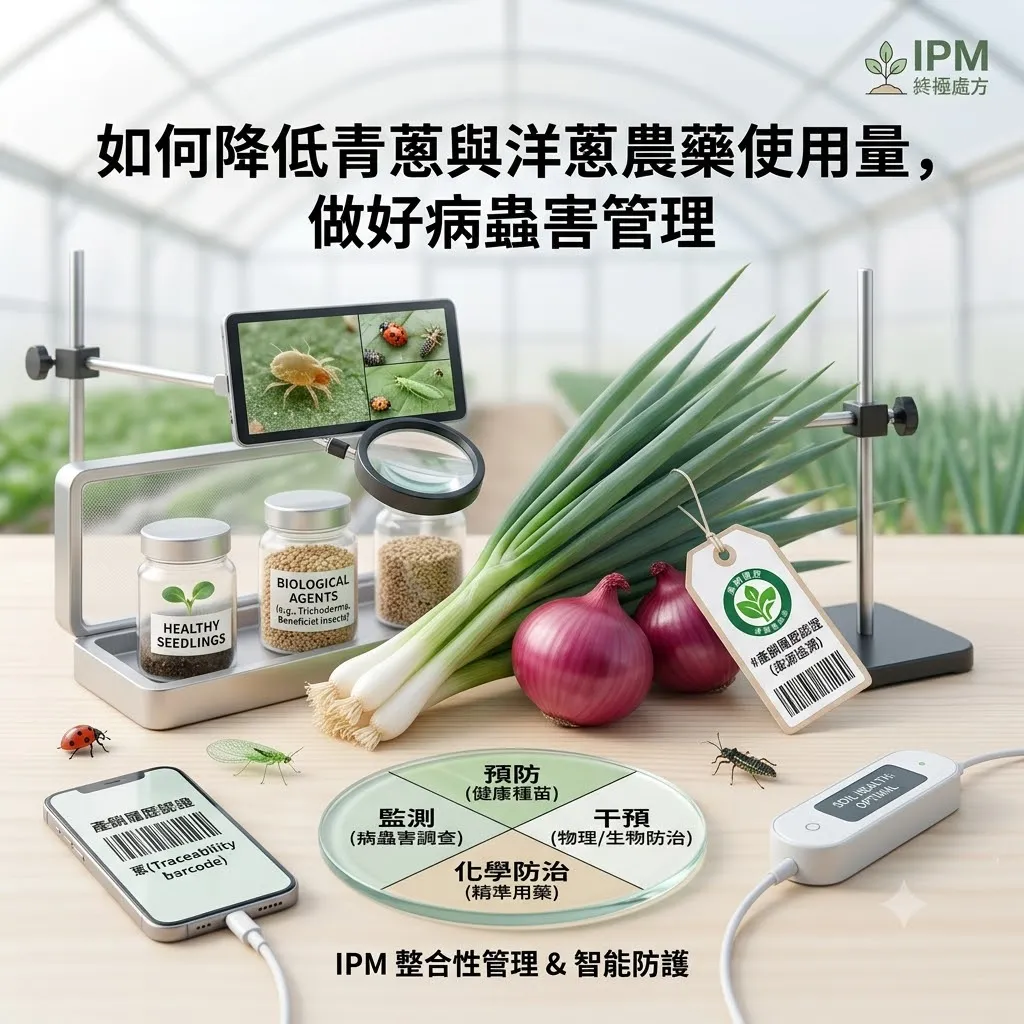
  1. Scallions Under Threat from Torrential Rain and Pesticide Residues: Smart Greenhouses, Toxin-Free Farming, Traceability and IPM

    In the two decades after the Second World War (the 1940s to 1960s), farmland was over-sprayed with pesticides, polluting groundwater and soil and even making pests resistant to the chemicals, so that problems became harder to control.
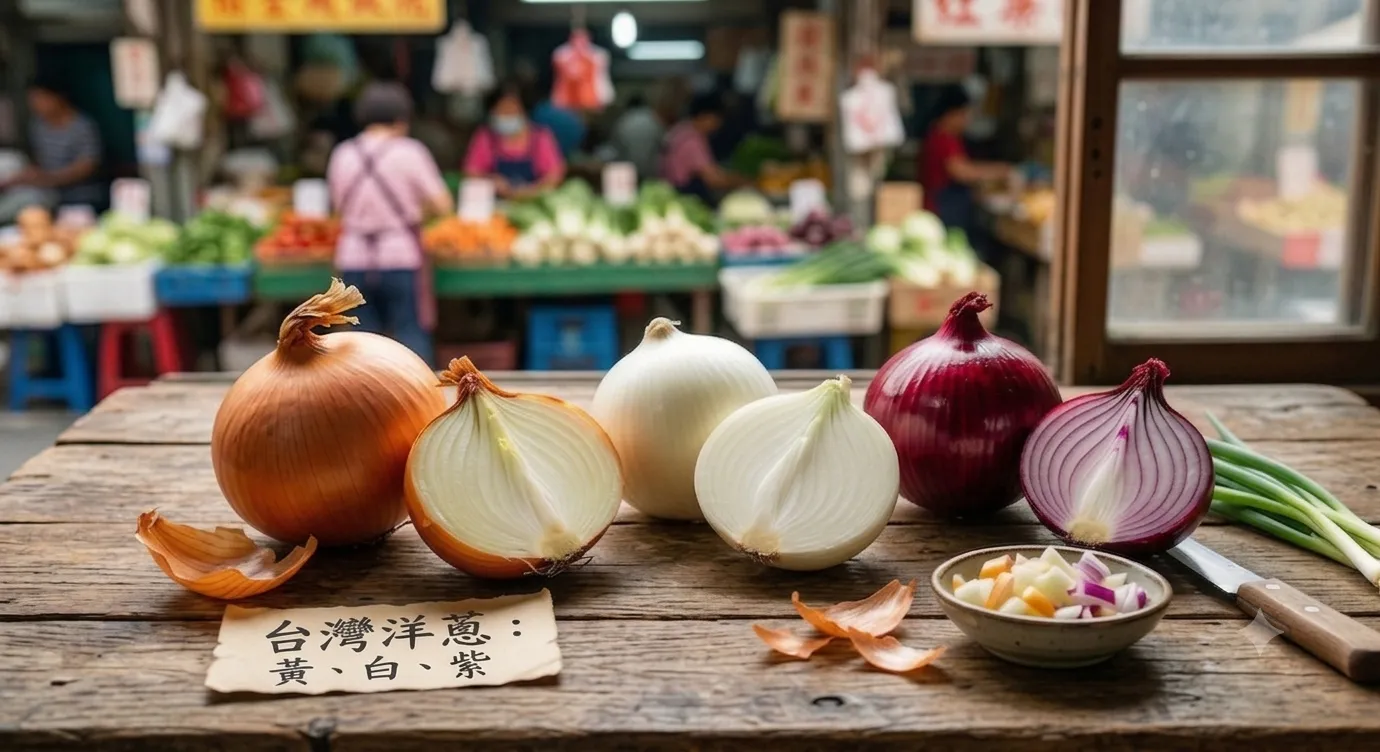
  2. Taiwanese vs Imported Onions: How Their Flavours Compare, How to Choose and How to Cook Them

    Each year the onion festivities begin in Yunlin, the largest growing area. From February to July 2026, it is expanding its “Walking with the Gods in Yunlin” events, combining an ocean music festival with sightseeing and a registration lucky draw to build excitement and actively market local produce across Taiwan.

  3. Taiwan's Onions Over the Past 5 Years: From Supply Gluts to Exports to Japan Against the Odds

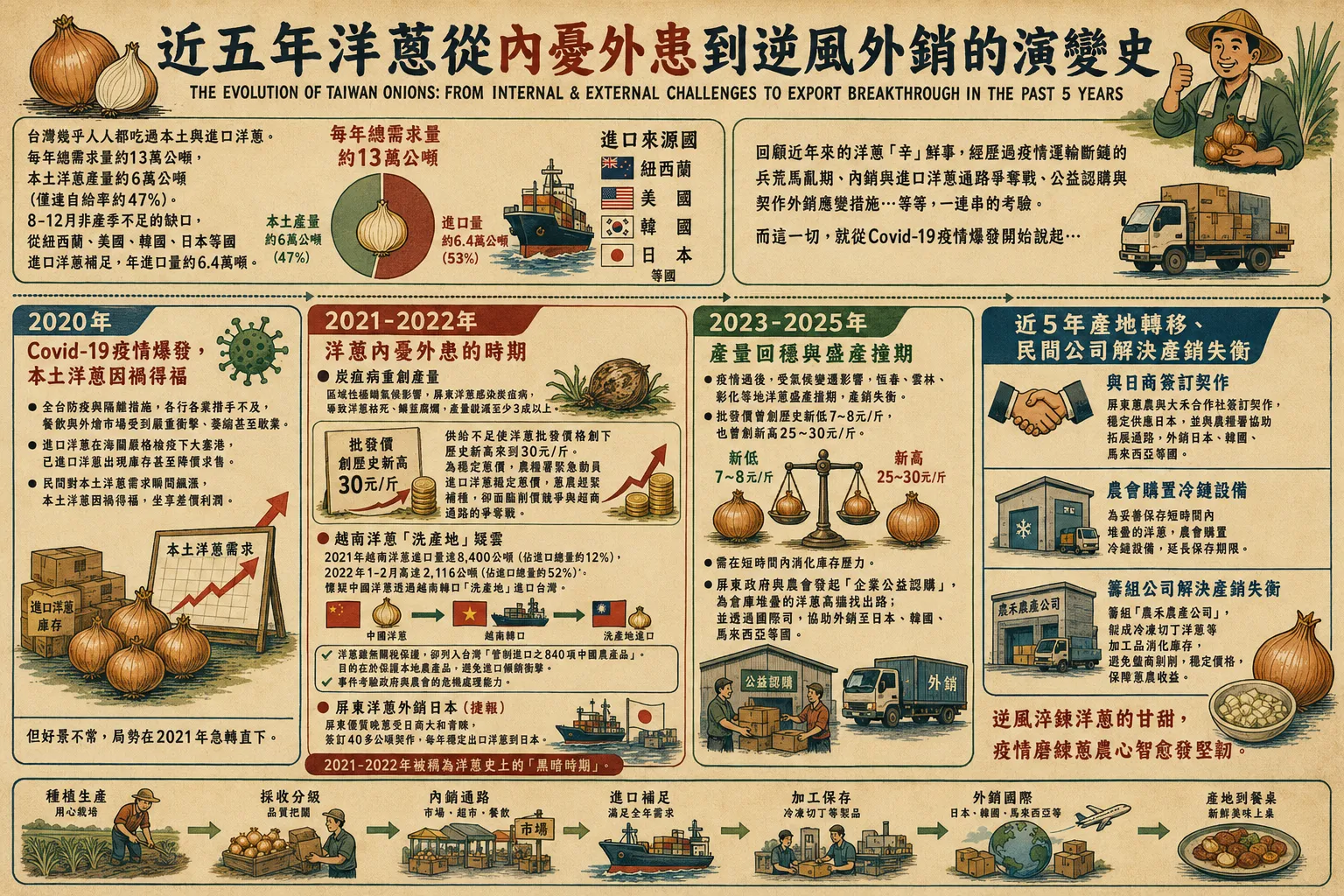
    Almost everyone in Taiwan has eaten both local and imported onions. Total annual demand is about 130,000 tonnes, while local production is about 60,000 tonnes (a self-sufficiency rate of only about 47%); the off-season gap from August to December is filled with about 64,000 tonnes a year imported from New Zealand, the United States, South Korea, Japan and elsewhere.

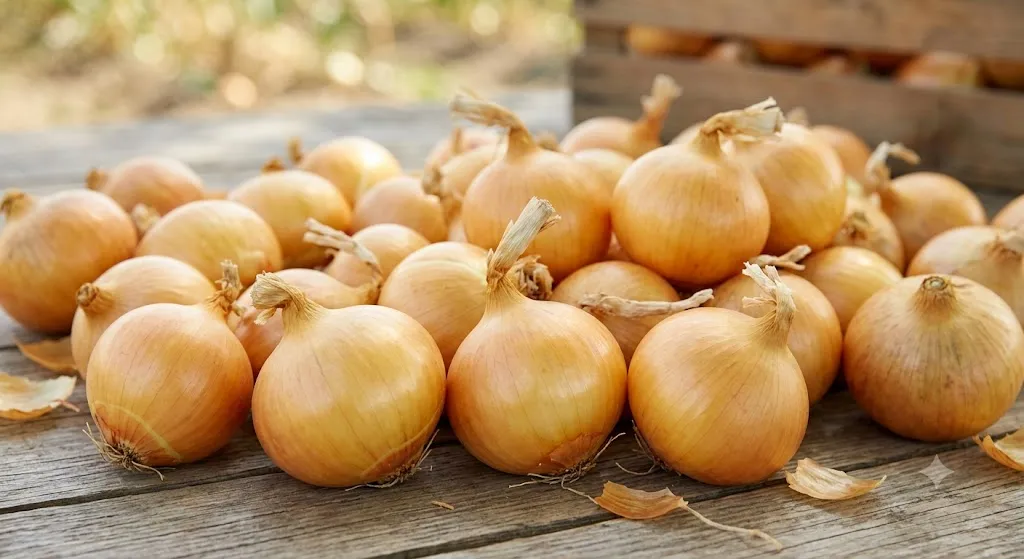
  4. Taiwanese Onions Explained: Growing Areas, Yellow, White and Red Varieties, How to Choose Them and Cut Without Tears

    More than 90% of the onions grown in Taiwan are introduced “short-day varieties”, known for being sweet, mild and early-maturing: fair-skinned beauties that ooze juice when pinched and have a sharp bite.

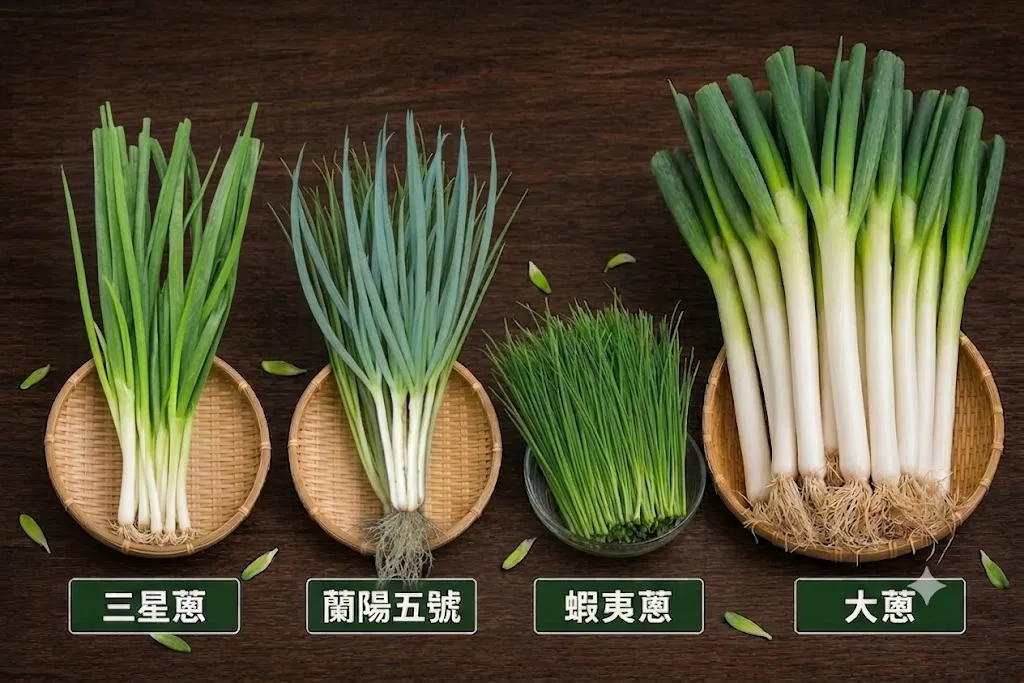
  5. Taiwan's Scallion Varieties Explained: Sanxing, Northern, Shallot-Type and Welsh Onions, Origins and Flavours

    At Taiwan's local food festivals, the stars are not only premium meat and fresh produce. Every winter and spring, the humble scallion, a supporting player in cities north and south, takes turns in the spotlight and fills small towns with its aroma.

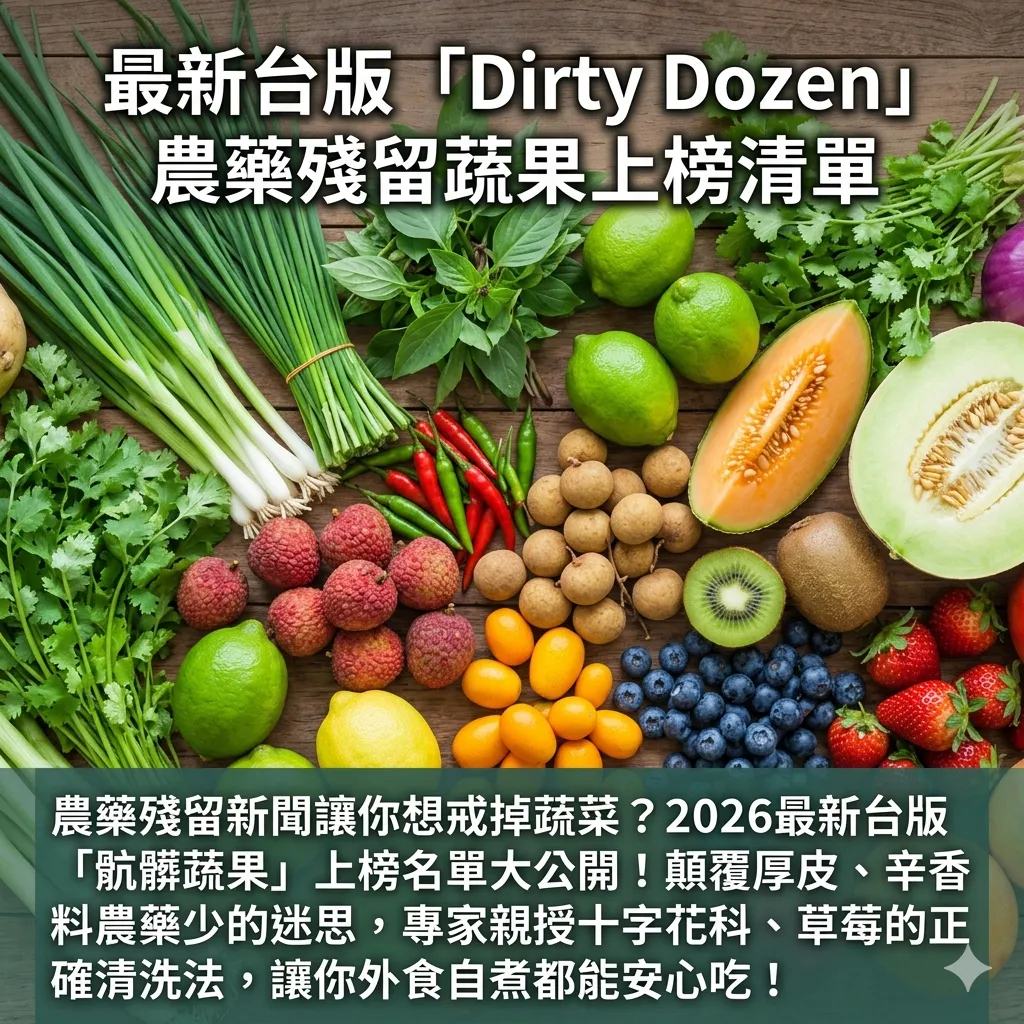
  6. Choose Smart, Wash Right: Busting Myths About Pesticide Residues on Fruit and Vegetables for a Balanced Diet

    News about pesticide residues on farm produce, followed from April to June 2026, has made it hard for many consumers who care about a balanced diet to eat fruit and vegetables with peace of mind, and has even given students who never liked vegetables a perfect excuse to skip them. Do we really have to raise our budget for organic vegetables or salads to eat a balanced diet?

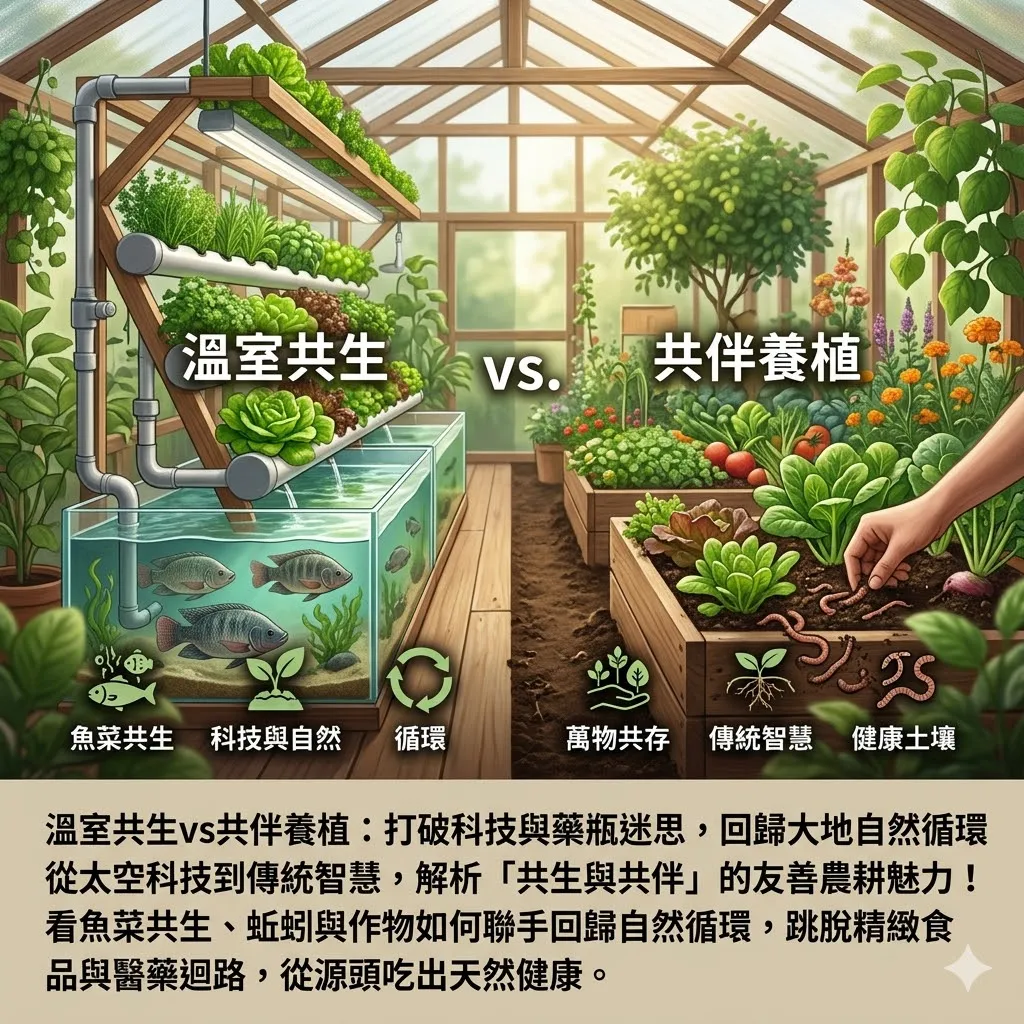
  7. Greenhouse Symbiosis vs Companion Planting: Beyond the Myths of Technology and Pesticide Bottles, Back to Nature's Cycles

    In June 2026, cash-burning rocket company SpaceX held its initial public offering (IPO), and money-hungry investors piled in, pushing entrepreneur Elon Musk's net worth past one trillion US dollars. This financial headline seems to have nothing to do with GM crops, yet the two can be linked, at a stretch.

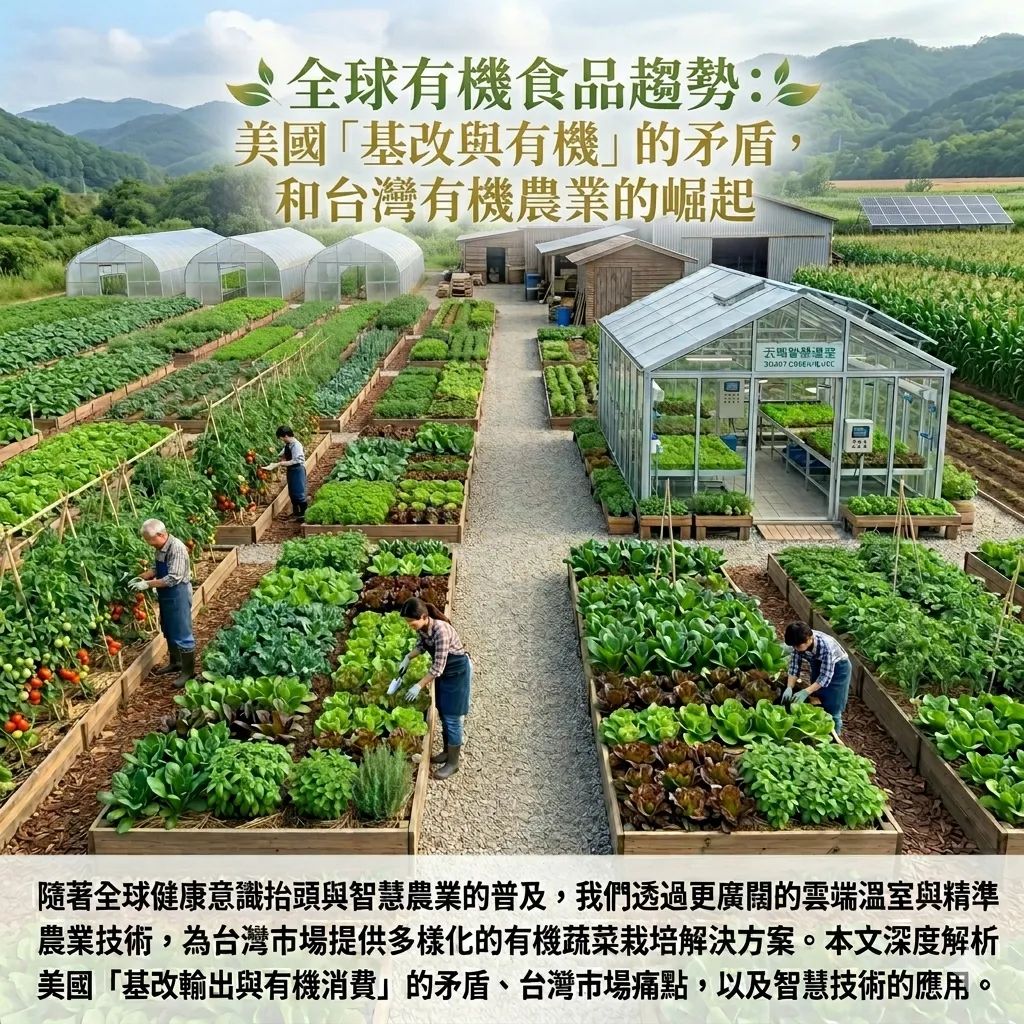
  8. Global Organic Food Trends: America's GM-and-Organic Paradox and the Rise of Organic Farming in Taiwan

    According to a 2022 report on organic agriculture, many countries have greatly expanded the area under organic crops. Australia, a nation built on farming and grazing, has the world's largest share of organic farmland, while India has the most organic producers.

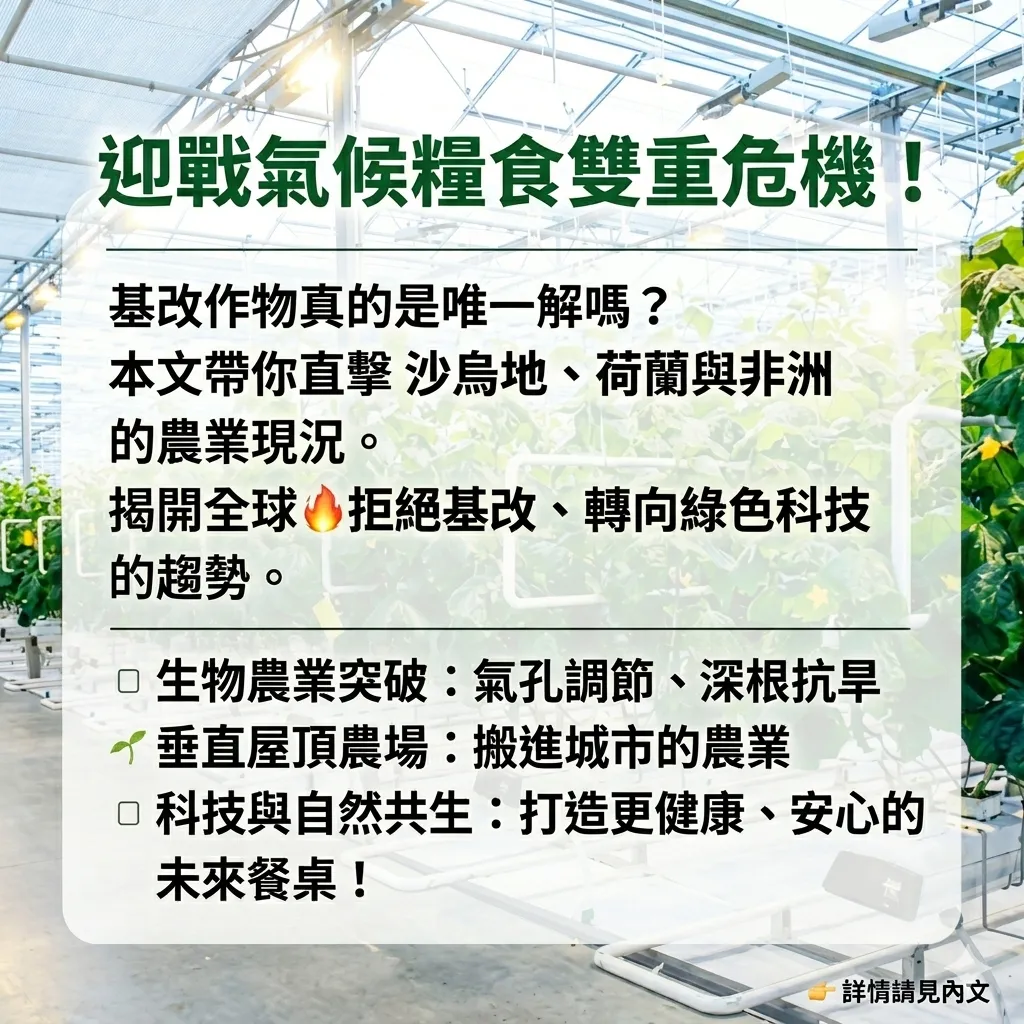
  9. Do Extreme-Climate Regions Need GM Crops? Innovative Paths from Biotechnology and Urban Farms

    GM crops were originally meant to solve food crises under climate change: they are stress-resistant, can grow in harsh polar and desert conditions, and are drought- and pest-resistant with less pesticide use. But do countries with extreme climates actually grow them widely?

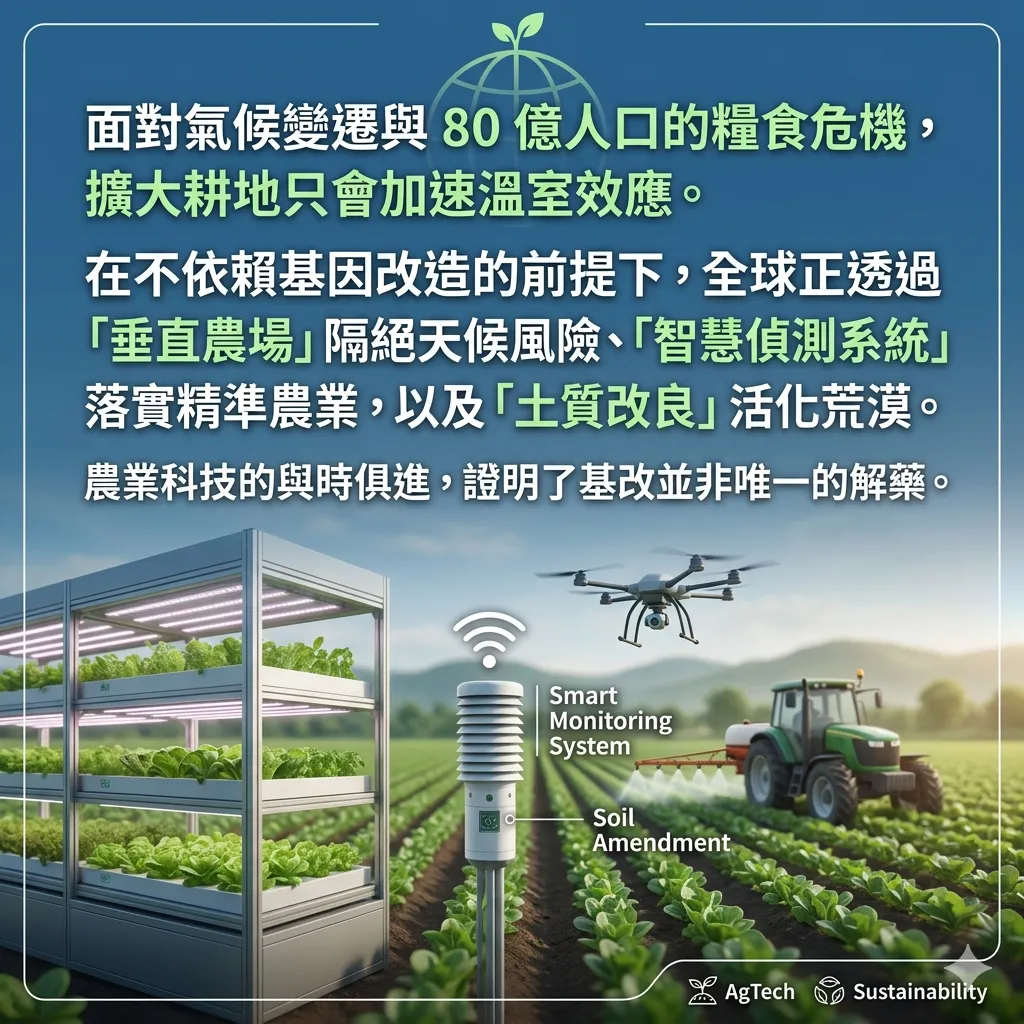
  10. Sweat and Rain Before GMOs: How Smart Farming Is Driving a Non-GM Green Revolution

    The world's population has reached 8 billion. Feeding everyone on Earth through traditional food production usually means expanding farmland, clearing mountain forests and shrinking the rainforests, which accelerates global warming, reduces biodiversity and drives regional climate change.

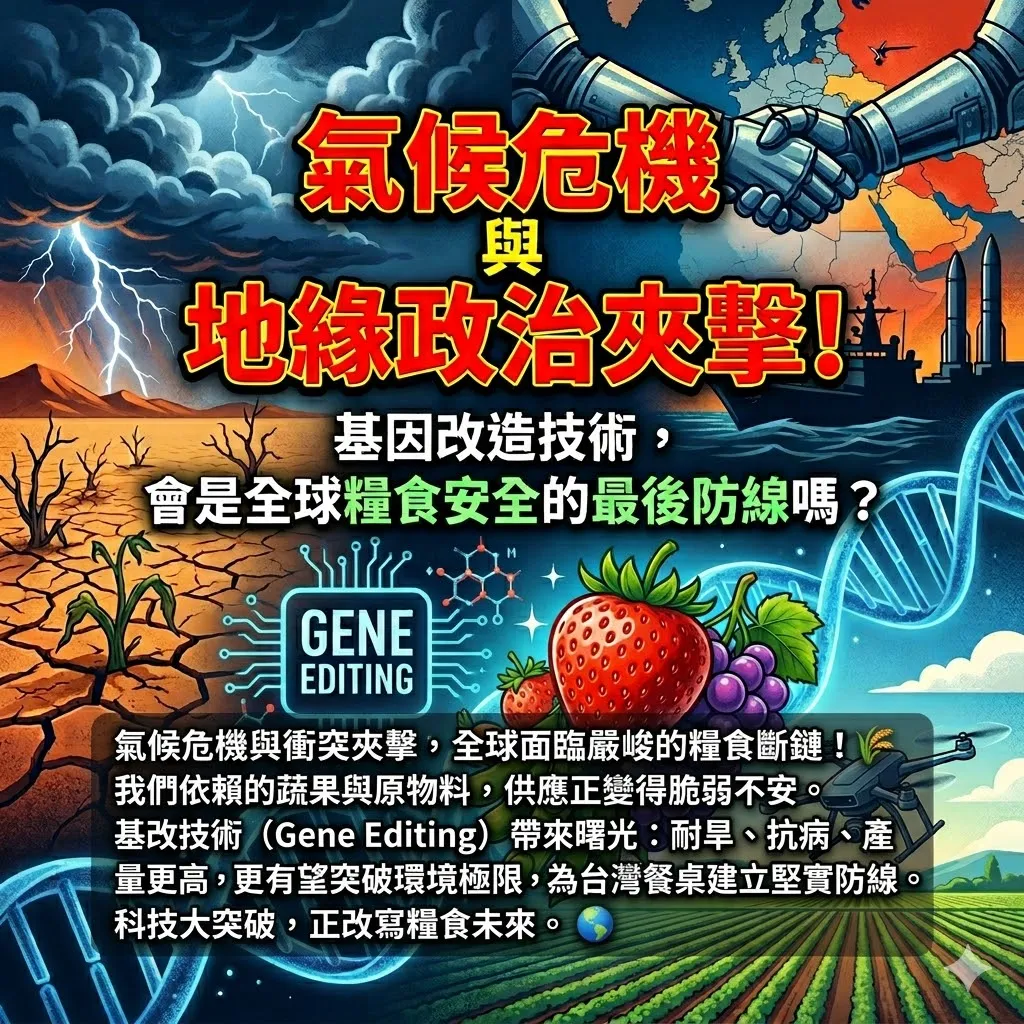
  11. Squeezed by Climate Crisis and Geopolitics: Could Genetic Modification Be the Last Line of Defence for Global Food Security?

    Genetically modified organisms (GMOs) have been developed for more than fifteen years and are still being researched in many countries. Although GMOs have underperformed in the field and in the market, global warming and increasingly normal extreme weather have strengthened countries' resolve to develop them, and GMOs will become key to breaking through adversity.

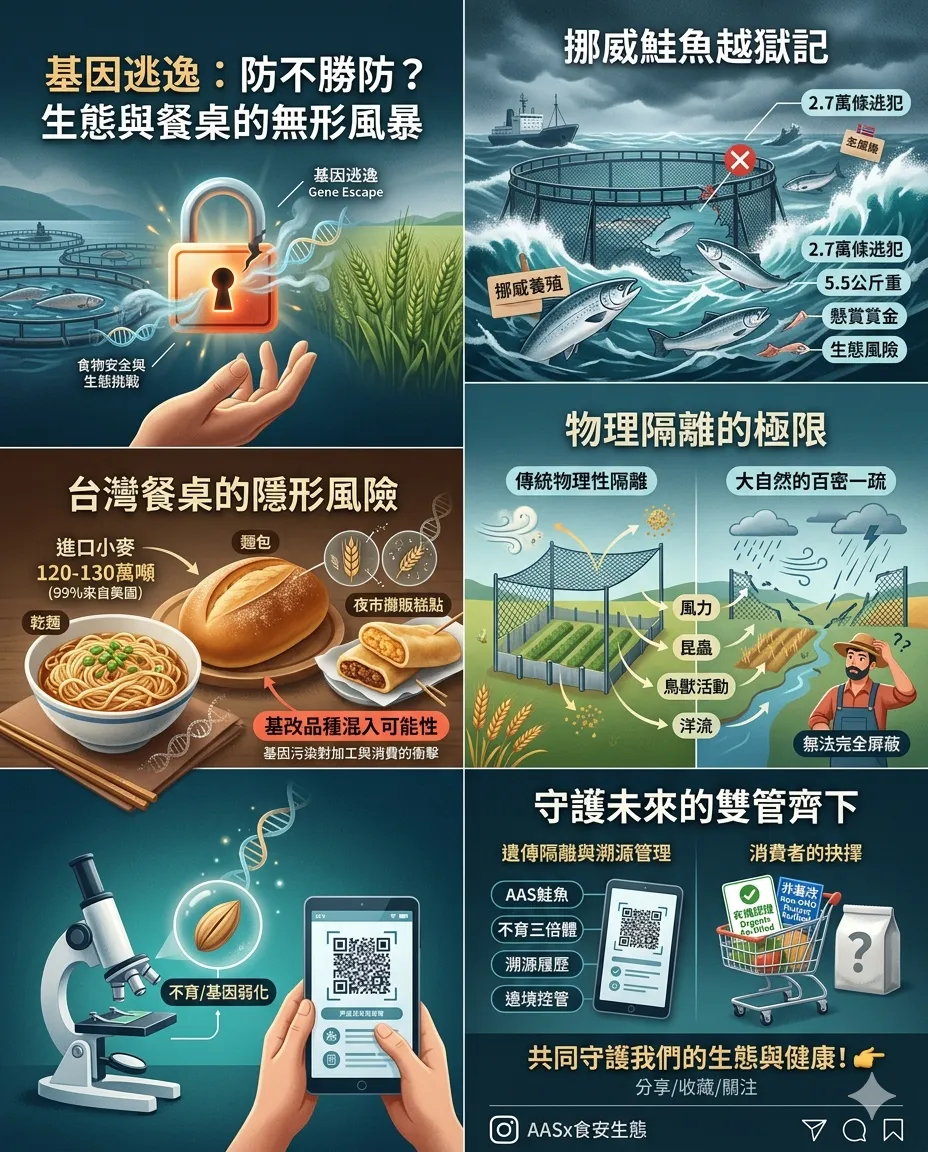
  12. Can Gene Escape Be Stopped? From Norway's Salmon Breakout to GM Wheat Contamination, How Do We Protect Food Safety and Ecosystems?

    In February 2025, a storm in Norway damaged the net pens of an offshore salmon farm. Salmon averaging 5.5 kg poured out through the gap, forcing the Norwegian authorities to offer a bounty of NOK 500 (about NT$1,000) per fish for 27,000 fugitives to avert an ecological disaster.

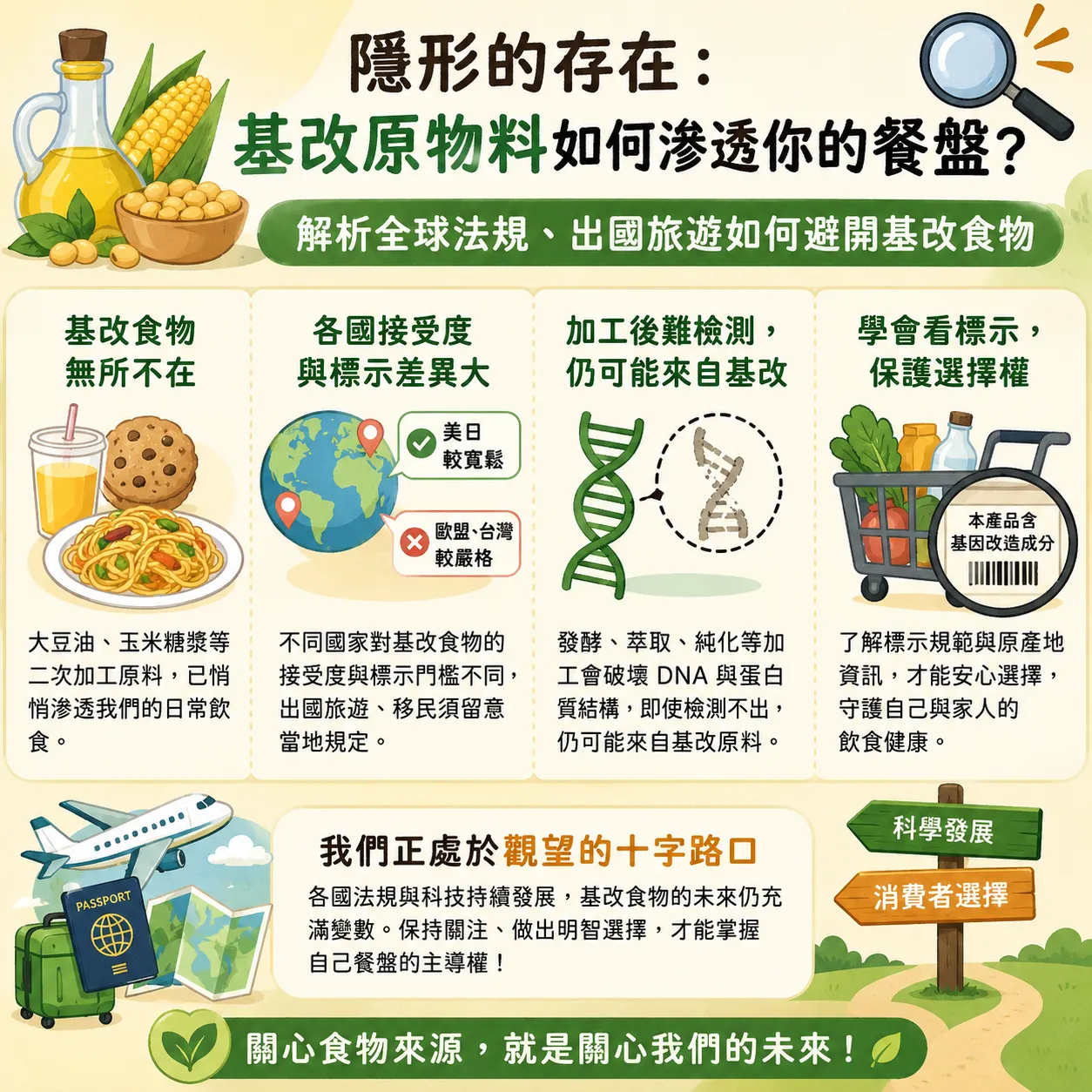
  13. Invisible Ingredients: How GM Raw Materials Reach Your Plate, Global Rules, and Avoiding GM Food Abroad

    According to statistics, about 75% of soybeans are processed into soybean oil, widely used by restaurants for stir-frying, while fructose syrup and cornflour made from corn are indispensable to many drink and pastry shops. Through “secondary processing”, genetically modified foods take on all kinds of forms and find their way into our diet.

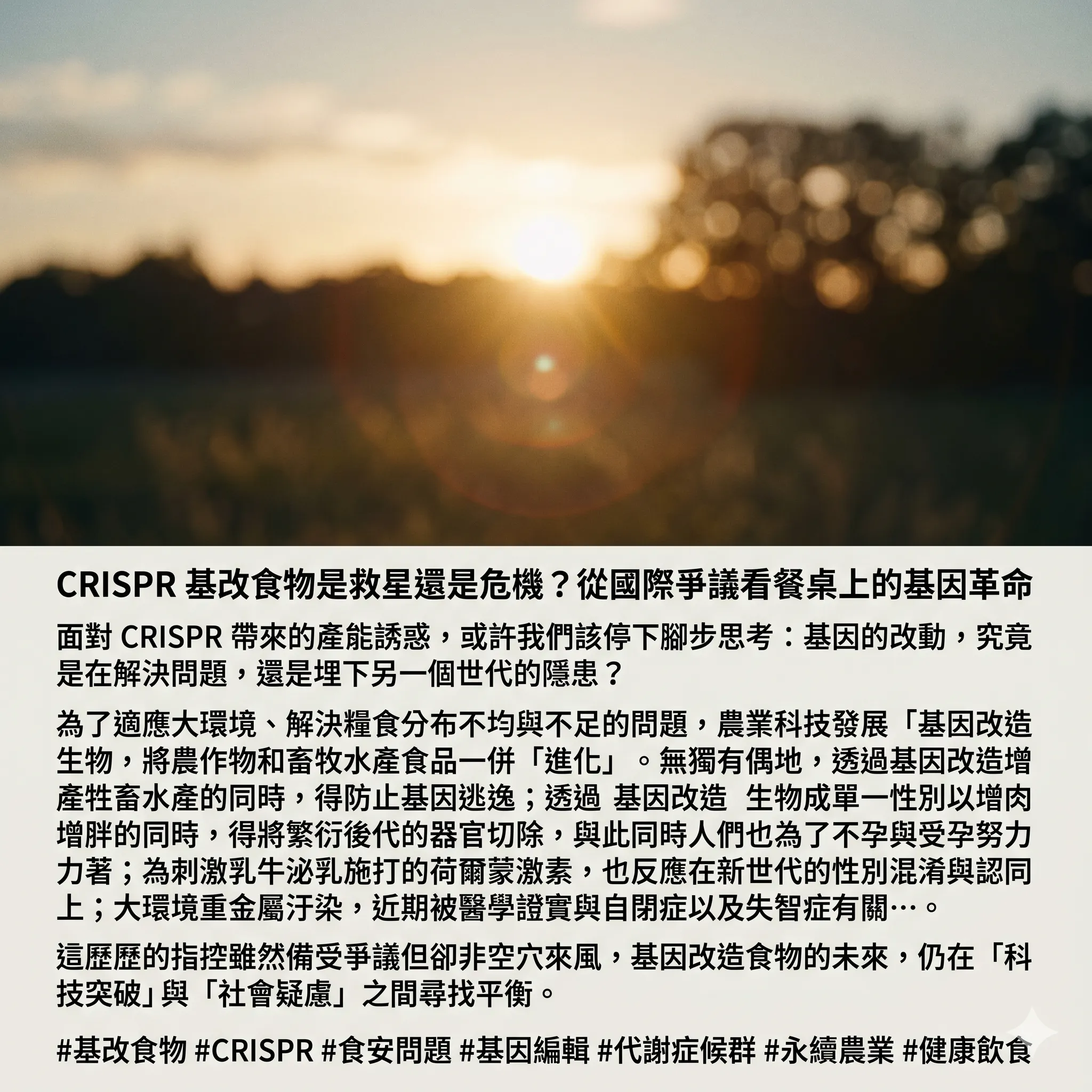
  14. Is CRISPR GM Food a Saviour or a Threat? The Genetic Revolution on Our Plates, Seen Through Global Controversies

    Whether GM food is developed or imported, CRISPR gene-editing technology is used to modify it. Compared with traditional cross-breeding, it greatly shortens the time needed to find the desired genes and is widely used in agriculture, biology and medicine, yet the promotion of GM food has run into obstacles.

  15. A Cure for Food Crises or a Health Hazard? GMOs, the 2025 Imported Potato Row and Taiwan's Gene-Editing March

    There was a time when the words “genetic modification” struck fear into consumers. What does eating GM food do to our health? A “genetically modified organism” (GMO) is made by transferring genetic material into living cells, forcibly changing their genetic traits.

  16. Which GM Foods Are You Eating? Taiwan's Soybean, Corn and Wheat Imports, and a Buying Guide

    Taiwan is rich in produce, with its land yielding different fruit and vegetables through the seasons, but it cannot be self-sufficient in all of its food. As climate change brings poor harvests and degraded farmland, genetic modification (GM) has rescued many countries from food crises.