A Saviour in Taiwan’s Food Crisis? The State of Genetically Modified Food Imports
Taiwan is rich in produce, with its land yielding different fruit and vegetables through the seasons, but it cannot be self-sufficient in all of its food. As global climate change brings poor harvests of fruit and vegetables, degraded farmland and other factors that leave food supplies short, genetic modification (Genetically Modified, GM) technology has rescued many countries from food crises, and through international trade agreements it supplies Taiwan reliably and quickly.
At present, the items that have obtained Taiwan’s inspection and registration approval as genetically modified food ingredients, and the GM foods on the market, are soybeans, corn, cotton and rapeseed. Of these, the bulk food commodities most closely tied to our diet are soybeans and corn.
By the Numbers: How Much GM Crop Do We Import?
According to 2025 data, the United States is Taiwan’s most important food supplier, providing nearly 70% of its soybeans, corn and wheat. Of these:
1. Soybeans: Hidden in Oils and Processed Foods
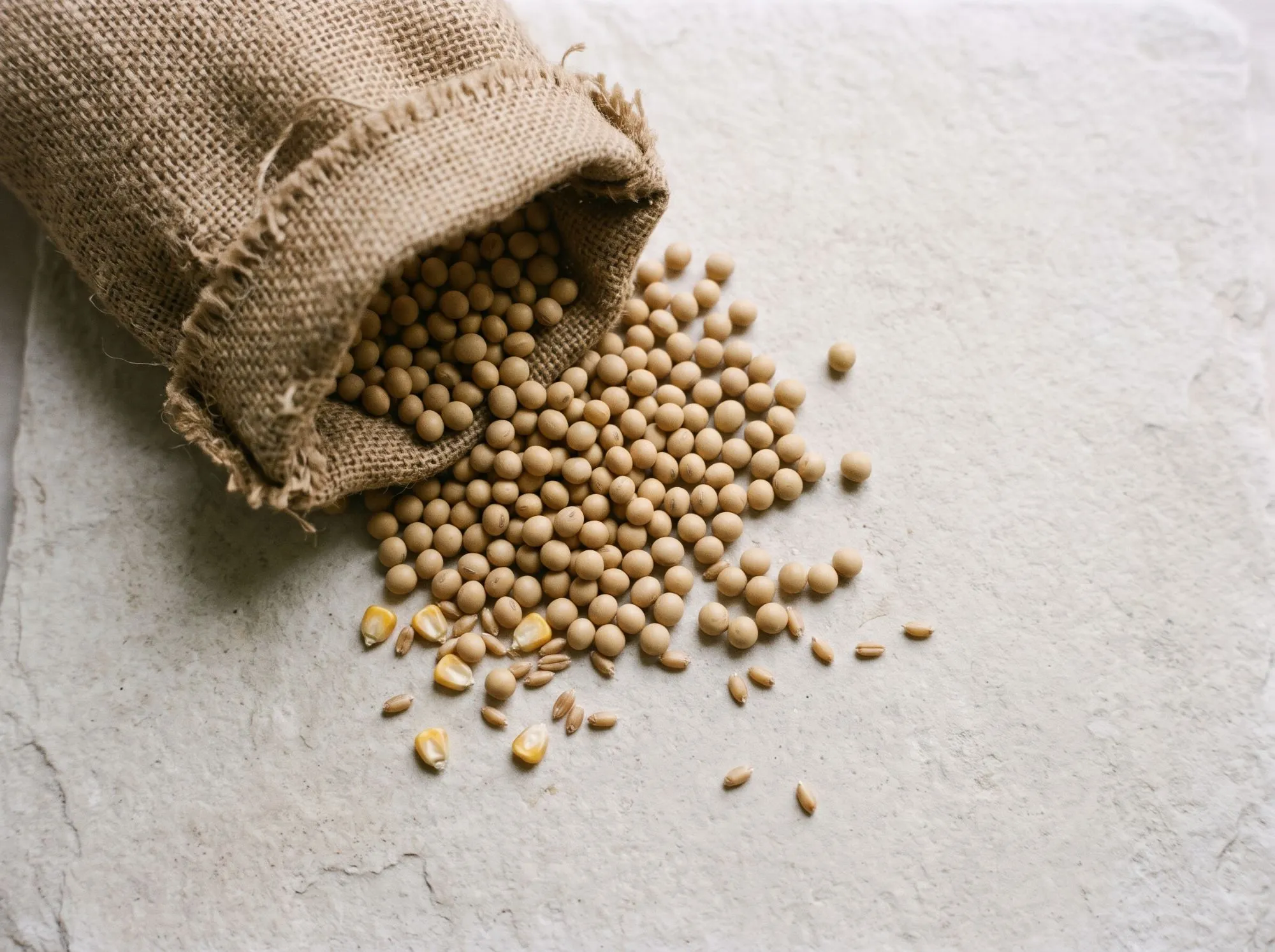
In 2022 and 2020, soybean imports were around 2.6 million tonnes or more, mainly GM soybeans, which made up 97%, with non-GM soybeans only 3%. Of these, 75% are mainly made into soybean oil; 10% go to food processing plants or pharmaceutical companies to be made into secondary processed products, including soy milk, tofu, soy sauce, lecithin and high-protein nutritional supplements; and the remaining 15% or so is used directly as animal feed.
From this, we can see that there is a fairly high chance we buy genetically modified foods, including soybean oil, tofu, dried tofu, soy milk and other secondary processed foods!
2. Corn: Two Parallel Lines, Local and Imported
Taiwan has long imported large amounts of corn, mainly for animal feed, chiefly from major GM-growing countries: Brazil, 2.369 million tonnes (59.2%); the United States, 783,000 tonnes (19.6%); South Africa, 530,000 tonnes (13.3%); and Argentina, 285,000 tonnes (7.1%). Grain corn imports totalled about 4 million tonnes (2023).
Taiwan also imports sweetcorn for eating. In 2020, total sweetcorn imports came to 32,465 tonnes: 23,417 tonnes from Thailand (72%), 3,126 tonnes from France (about 10%) and 2,883 tonnes from the United States (about 9%).
Imported sweetcorn is mainly frozen or canned, and the corn imported from Thailand and France is not genetically modified. Thailand is also internationally known for exporting large, juicy sweetcorn, and in 2008 it was hit with anti-dumping duties by the European Union.
In addition, the edible corn grown in Taiwan (including sweetcorn, waxy corn and baby corn) and the flint corn used for feed (also called green-cut corn, 青割玉米) are not genetically modified. In 2023, feed corn was grown on about 23,000 hectares with an output of about 100,000 tonnes, and edible corn on about 14,000 hectares with an output of about 120,000–130,000 tonnes. Yunlin is the largest growing area (about half), and edible corn is broadly self-sufficient.
Besides being served as a side dish and in salads, corn is also made into secondary processed foods such as tortillas, syrup and corn-based coating flour. Although the share of imported GM corn is not high, it is impossible to completely rule out tiny amounts ending up in processed foods.
3. Wheat: Still Untouched by GM for Now
According to customs import and export statistics, Taiwan imports about 1.4 million tonnes of wheat a year, more than 99% of it from the United States and Australia (about 80% from the United States). Although rice is Taiwan’s staple, it also imports large amounts of non-GM wheat, used by food and bakery factories as the raw material for pastries, bread, biscuits and more.
Genetically Modified Foods Are Everywhere
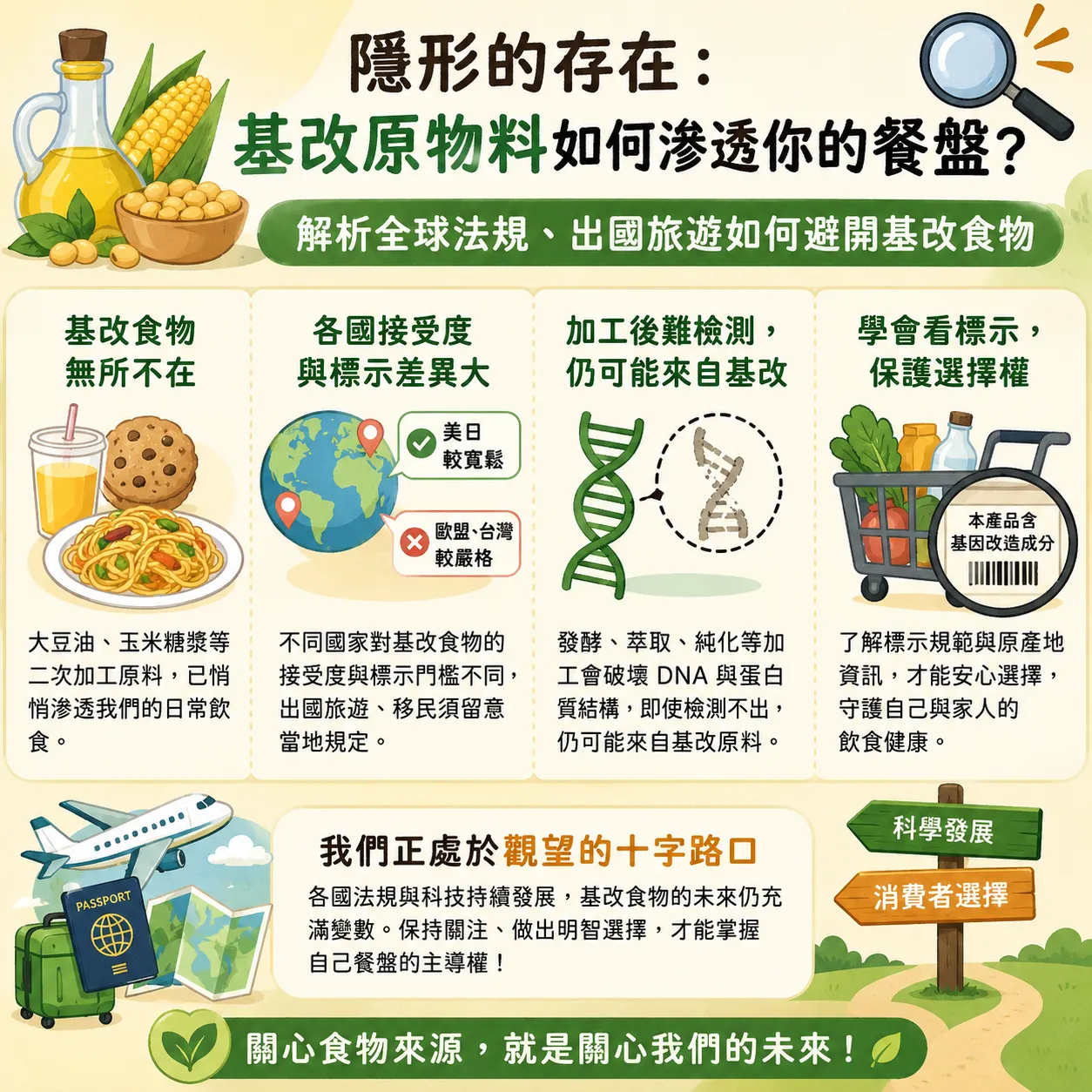
In short, Taiwan depends heavily on major GM-growing countries for its bulk imported food commodities. Although a high proportion of soybeans and corn is used as feed, and the government firmly prohibits the private production of genetically modified livestock, aquatic products and crops, the GM bulk commodities soybeans and corn have long since broken through our first line of defence and are added in some proportion to the food we eat every day. So we can say that it is hard to avoid eating genetically modified food in everyday life!
For example, looking at our everyday diet, from the first sunlit breakfast of the morning we may already have eaten something made with GM ingredients: soy milk (ingredient: soybeans). Lunch and dinner from casual eateries or restaurants include staples, soy products and the coating on fried food (ingredients: soybean oil for pan-frying, boiling, stir-frying and deep-frying, soybeans, corn). Beyond that, any secondary processed products from food suppliers, restaurants, food stalls, drinks shops, cafés and so on that do not state their ingredients and sources may also use GM sources, including the flour, shortening and flavourings used to make pastries for afternoon tea or festivals (ingredients: wheat, soybeans, corn), and the high-fructose syrup in drinks (ingredient: corn). The ingredients may all contain some proportion of imported GM ingredients. So it is no exaggeration to say that “genetically modified food has long been part of our daily diet”.
The “GM Net” Around Us: How Can You Avoid It?
Under the Act Governing Food Safety and Sanitation (《食品安全衛生管理法》), any product that uses GM soybeans as an ingredient, where that ingredient makes up 3% or more of the total weight of the final product, must be labelled. Consumers who mind buying GM foods are advised to buy products that state their ingredients and sources, and to look for wording on the packaging such as “made with non-genetically modified ○○” as a guide when shopping.
For people who eat out a lot and health-conscious people who want to eat as healthily as possible and avoid GM foods, the simplest approach, besides eating less food and fewer drinks made from soybeans and corn, is to buy foods labelled “contains no genetically modified ingredients” from supermarkets and hypermarkets. We may find it hard to avoid GM foods completely, but by reading labels wisely and choosing local products, we can still take charge of what’s on our table.
Enjoyed this article? Get the newsletter
Our newsletter is written in Chinese for now: new articles and series, with an editor’s note. No spam, and you can unsubscribe at any time.