Onion Culture Festivals
Each year the onion festivities begin in Yunlin (雲林), the largest growing area. From February to July 2026, it is expanding its “Walking with the Gods in Yunlin” (與神同行遊雲林) events, combining an ocean music festival with sightseeing and a registration lucky draw to build excitement and actively market local produce across Taiwan.
In March, Linyuan (林園) in Kaohsiung takes up the baton with its “Khau Onions” (ㄎㄠ蔥頭, pulling onions) farm experience, inviting new immigrants from Vietnam, Thailand and Indonesia to make creative dishes from many countries using local onions, sparking new cooking ideas as they exchange ideas with one another.
In April, it is the turn of the final leg, Pingtung (屏東), which holds a “Farmer for a Day” (一日農夫) event where tourists can harvest late onions by hand in the fields, browse the farm-produce market on the old street, and listen to live music on the beach in the sea breeze of a summer night.
Farmers’ associations in each area lead tourists around the onion fields with real ingenuity, bringing the season to a calm, leisurely close in the luoshan wind (落山風, a strong seasonal downslope wind).
Imported Onions
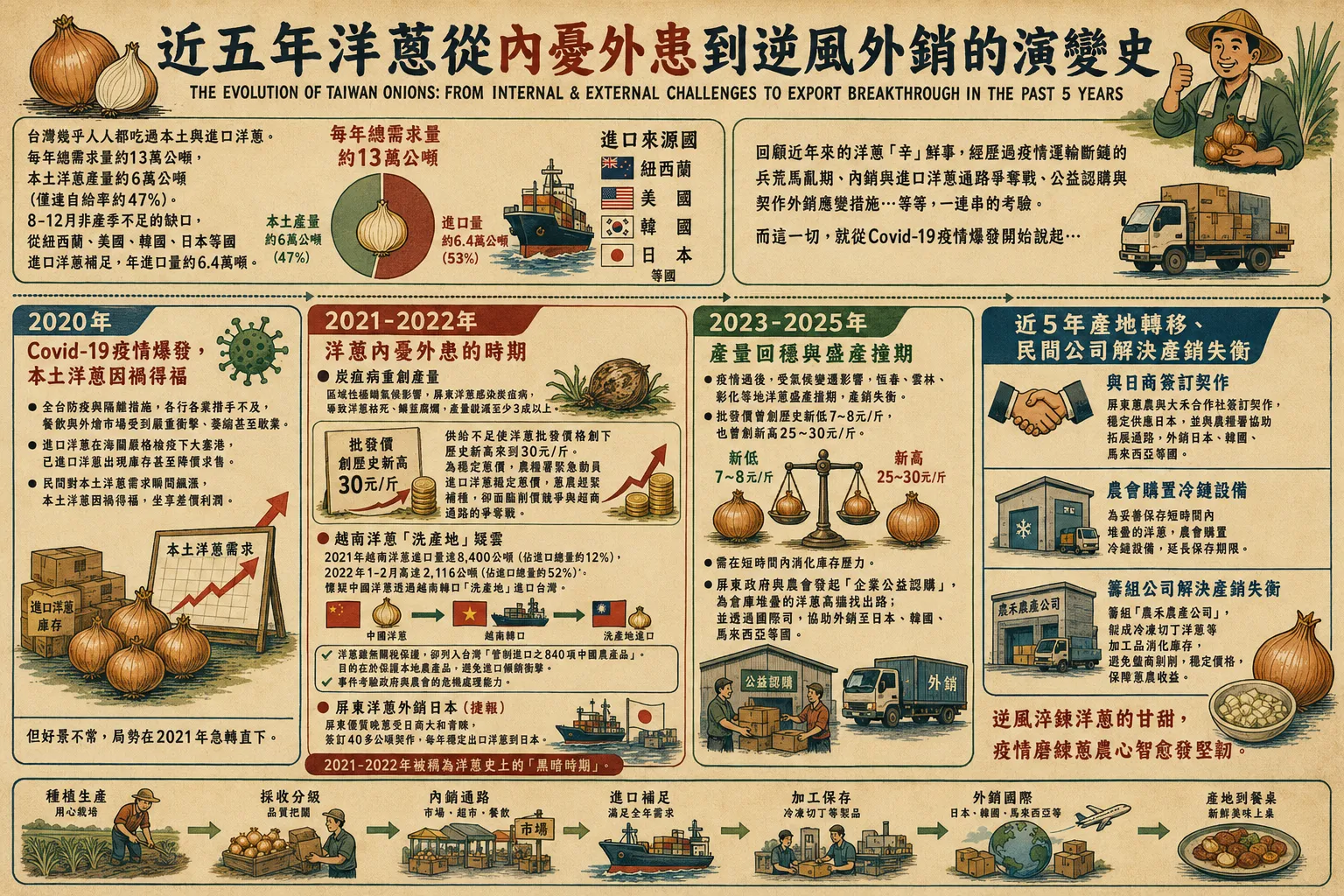
Taiwan does not grow enough onions and they are only available in season, so imported onions are needed to meet demand. Around August, markets and supermarkets gradually switch to imported onions on their shelves, so in everyday eating we are about as likely to eat Taiwanese onions as imported ones. But which is better for cooking, imported onions or local ones?
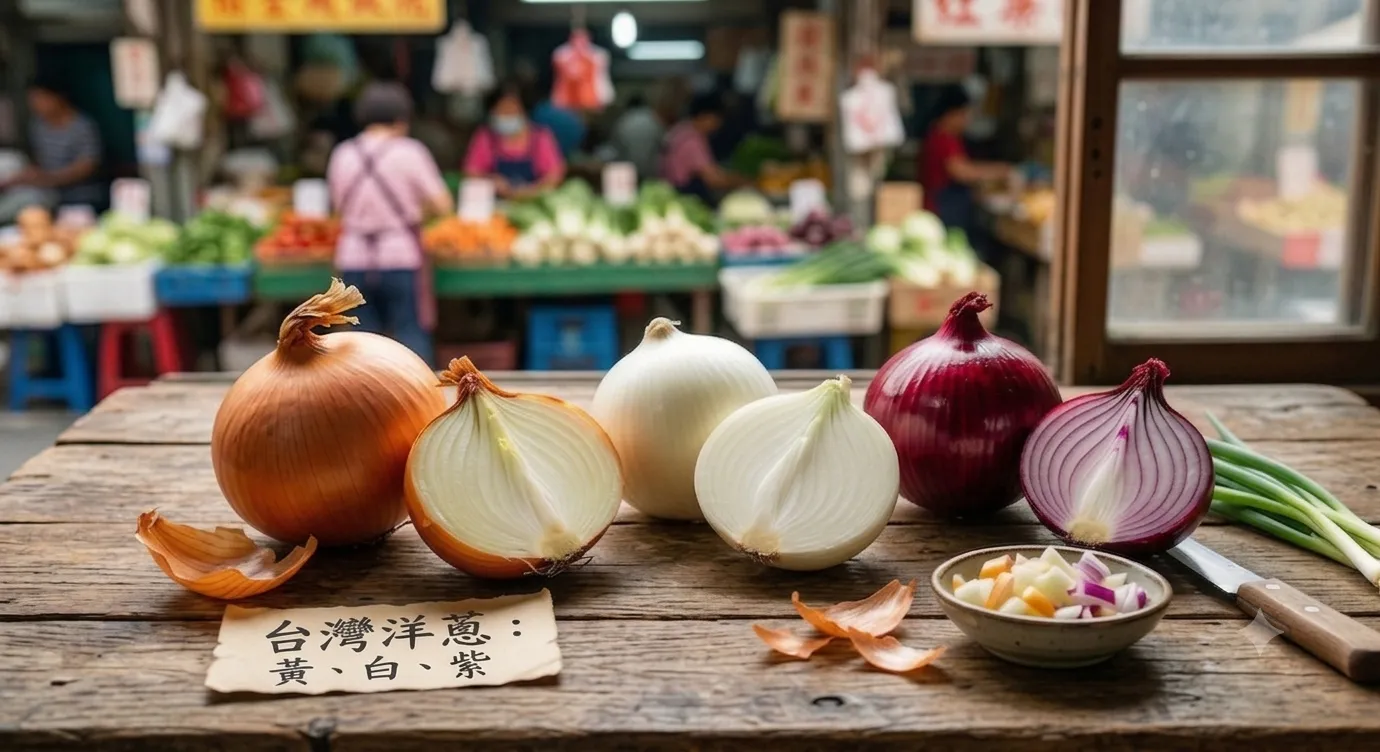
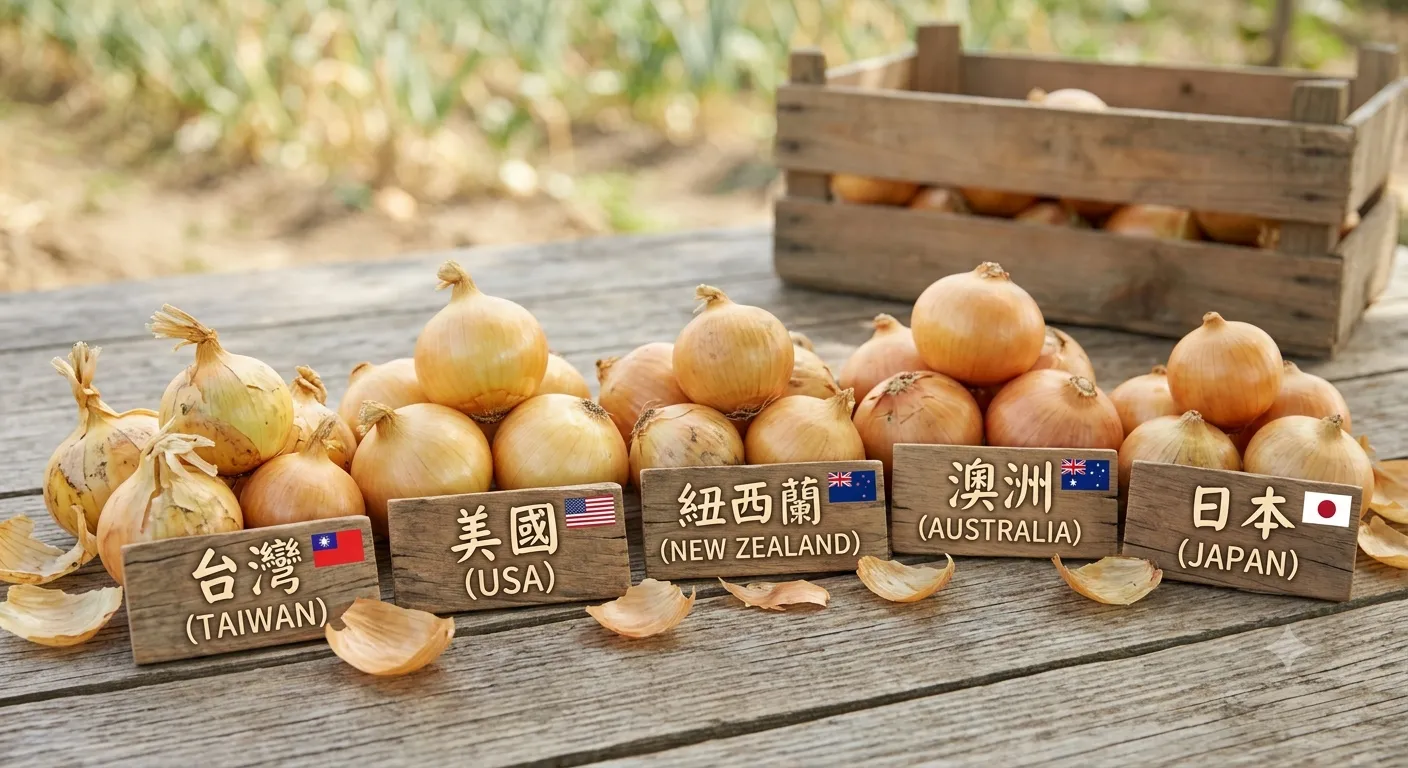
To cut a long story short: Taiwanese onions are “fresh, with a sharp bite, and make soups and stews tastier”; foreign onions are “less pungent, suited to cold salads, and popular with restaurant chains”. Common countries of origin: the United States, New Zealand, Australia and Japan.
- Japanese onions: among imported onions, they have a relatively fine texture and suit cold salads; eaten raw, they let you take in more nutrients.
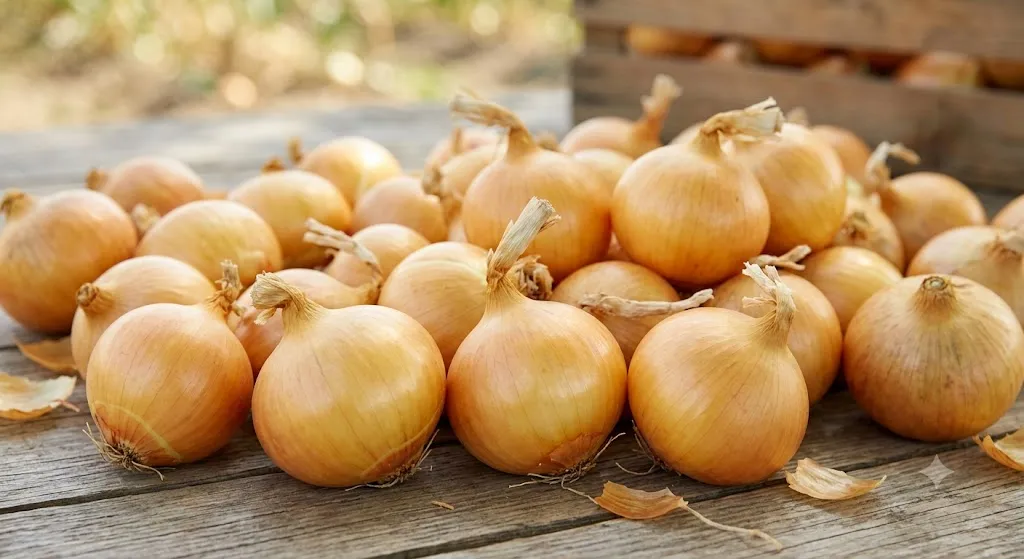
- Onions from the United States, New Zealand and Australia: plump and round, with a firm texture and less water, and a longer shelf life.
- The price of a longer shelf life: to extend their freshness so they can cope with long sea voyages and time on the shelves (up to several months), export onions are usually harvested early and dried and ripened, so they contain less water and feel heavier and denser.
Because of their lower water content, they do not release liquid and change the overall flavour, or even make the bread soggy, when used in burgers, so they are popular with breakfast shops. Because they keep longer, they are also chosen by fast-food chains and food factories that buy in bulk. From August to December, the market is dominated by foreign onions, which take relatively longer to cook in stews.
Taiwanese Onions
- Local onions: spindle-shaped bulbs. Beneath the papery outer layer, which breaks easily, the onion is softer in texture, higher in water and pungent. Changhua’s (彰化) onions (early onions) are planted first, and a late cold winter tends to make their bulbs small, but this does not affect the flavour. Generally speaking, smaller onions are sharper and larger onions are sweeter.
- Features: because of their high water content and soft texture, they soften quickly with short cooking times and release their sweetness into the dish, making them suited to home cooking. They are an essential ingredient in dishes such as Korean kimchi, smoked salmon with sliced onion, shrimp with silky scrambled eggs, onion stir-fried with meat, vegetable and meat curry, borscht, chowder (French onion soup) and beef brisket braised in red wine, adding a touch of sweet vegetable flavour to the stock.
- Popular with restaurants too: local onions cook quickly and are flavourful, releasing their taste in a short time and saving energy. As long as they are at their peak and priced on a par with imported onions, they are a good choice for restaurants too. From August to December, the market is dominated by foreign onions, which take relatively longer to cook in stews.
- Storage tips:
Store in a dry, cool, well-ventilated place, with a caveat. It is commonly advised that many root and bulb vegetables, such as onions, potatoes and sweet potatoes, can simply be stored in a dry, cool, well-ventilated place, but more precisely this means room-temperature conditions of 15–22°C and 50–60% humidity. Taiwan’s winter temperatures are suitable, but its average humidity is above 75% all year round, which is a little damp. Especially when the peak season coincides with the plum-rain and typhoon seasons, storage life is even shorter, and onions may sprout roots, go soft and rot, or grow black mould. So even for produce that can be stored at room temperature, it is best to eat it up as soon as possible.
Chopped or diced onion, whether stored in the fridge in an airtight box or a sealed bag, should be eaten as soon as possible before it changes flavour or goes soft and rotten. In addition, because onions give off odours, to avoid tainting the taste of other dishes or produce, it is best to store them in an extra sealed bag or on their own.
Produce to keep away from!
Bananas, apples, papayas and other fruit picked early and ripened with “ethylene” to extend their shelf life: an onion next to them will be prompted to ripen and sprout.
Potatoes and sweet potatoes: onions encourage them to sprout and become toxic, making them inedible. - A foodie’s secret: stews need onions to go through “caramelisation”. As they stew, the alliinase (Alliinase) and sulphur-containing amino acids that give onions their pungency release more vegetable sweetness, enriching the flavour of the dish.
Chefs who dislike the “sharp bite” soak onions in ice water for 10–20 minutes after cutting them, which greatly reduces their pungency. If the soaking water goes into the pot too, quercetin (Quercetin), a relatively heat-stable nutrient, ends up in the soup, adding flavour without waste.
Enjoyed this article? Get the newsletter
Our newsletter is written in Chinese for now: new articles and series, with an editor’s note. No spam, and you can unsubscribe at any time.