How Black, White, Green and Red Pepper Are Made, and How They Taste
The same pepper vine gives pepper of different colours and degrees of heat, depending on when it is picked and how it is processed. Overall, the black, white, green and red pepper used in cooking each have their own character: black pepper is lively, white pepper is restrained, and green and red pepper are mild, brightly coloured spices.
In terms of heat, black pepper is stronger and more pungent than white, green or red pepper. Here are their characteristics and the dishes each suits best:
- Black pepper: unripe berries are picked from the pepper vine and dried in the sun or in a dryer, so the skin shrinks and turns into black peppercorns. Its spicy aroma is intense, making it ideal for steaks and grills and marinades, and for masking gamey or fishy flavours.
- White pepper: made by removing the skin and flesh of the peppercorn and keeping only the white seed inside; its spicy flavour is pure and gentle. It is widely used in Chinese and Western dishes, soups and cream sauces.
- Green pepper: green, unripe berries are picked and steeped in brine or vinegar, or treated with sulphur dioxide or freeze-dried, giving berries of uneven shades of green.
The taste of green pepper depends on how it is processed: brined green pepper is milder, while low-temperature-dried green pepper is a little hotter and sharper on the nose. Green pepper is mostly used to flavour cream soups or salads, and its bright green colour often makes it a garnish. - Red pepper: ripe red pepper berries are picked and salted or dried with the skin kept on. It is a sweet pepper with a slightly fruity or piney note, and is produced only in small quantities. Its vivid red is also often used as a garnish.
Red pepper is mostly used to season fish, meat and sauces in Western cooking, as well as desserts and drinks, and is often paired with other peppers to add a layer of sweetness to the spice. Five-colour peppercorn blends are also sold, giving dishes a complex spiciness.
However, red pepper (pink peppercorn) belongs to the cashew family (Anacardiaceae) rather than the genus Piper, so people allergic to cashews or mangoes should take care.
The Five Major Pepper Origins and Their Grades (Malaysia, Cambodia, Vietnam, India, Indonesia)
Today’s main pepper-producing countries include India, Malaysia, Cambodia, Indonesia and Vietnam, each with different grades, market positioning and customers.
- Malaysia: Sarawak pepper: rich in musky notes with a hint of liquorice and lemon, it is grown by Indigenous communities using organic farming methods. Sarawak pepper is under strict quality control by the Malaysian Pepper Board (MPB) and is aimed mainly at mid- to high-end markets in Japan, Korea, China, Europe and North America.
- Cambodia: Kampot pepper: with notes of citrus and mint, and sweetness within its heat, it is known as “the champagne of pepper”. It holds dual certification: EU PGI geographical-indication protection and the Kampot Pepper Promotion Association (KPPA). Local specialities include crab stir-fried with pepper and all kinds of seafood.
- Vietnamese pepper: grown in Chư Sê district, Gia Lai province, and on Phu Quoc island. Vietnam is the world’s main pepper supplier; its advantages are large volumes and competitive prices, along with a steady supply, and it is widely relied on by the food-service industry.
- Indonesian white pepper: white pepper from Bangka is skinned and soaked in running water, then dried in the sun. The peppercorns are creamy white with a hint of grey and free of any sharp, sour or rotten smell, and are widely recognised as high-quality white pepper.
- India: Malabar black pepper: it stands out for its large, oily berries and rich aroma, and is trusted by mid- to high-end Western restaurants and speciality restaurants. India’s high-quality black pepper comes in two grades:
- TGSEB (Tellicherry Garbled Special Extra Bold): top-grade peppercorns of 4.75 mm or more, very ripe, with a warm, mellow fruitiness, aimed mainly at premium markets in Japan, Korea, China, Europe and North America. However, Tellicherry Standard peppercorns are the most common.
- MG-1 (Malabar Garbled Grade 1): grade-one Malabar black peppercorns of consistent quality, widely used in fine restaurants.
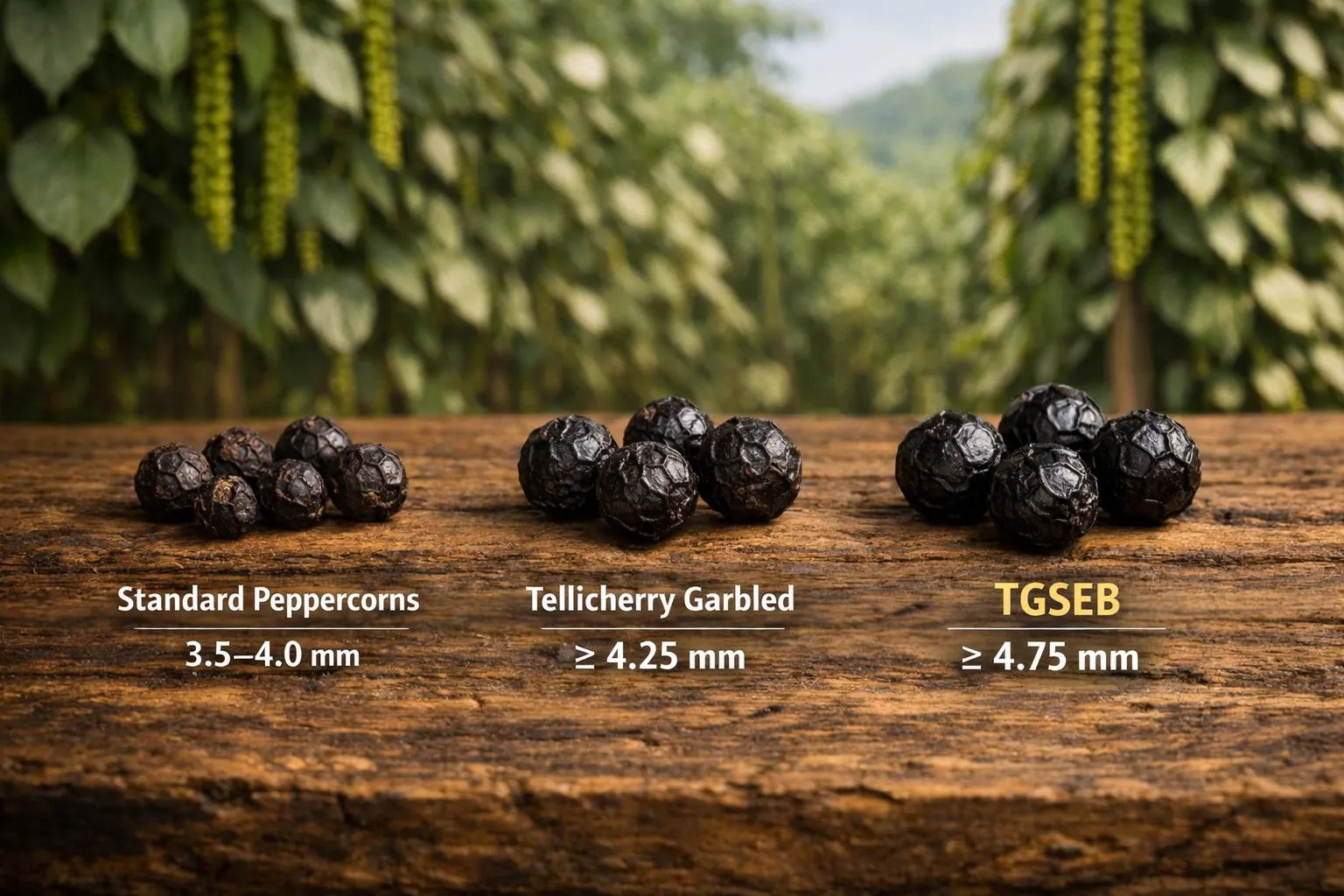
Image source: tellicherryblackpeppercorn.com
Overall, the aromas of each country’s pepper differ markedly with their terroir, and they are one source of material for chefs creating inventive dishes. But these aromas share a common weakness: they evaporate easily when heated, so they are short-lived and hard to keep. The floral and fruity notes unique to each region disappear completely, leaving only a flat, sharp heat. It is therefore best to add pepper at the end of cooking, to keep its original aroma and lift the flavour of the whole dish.
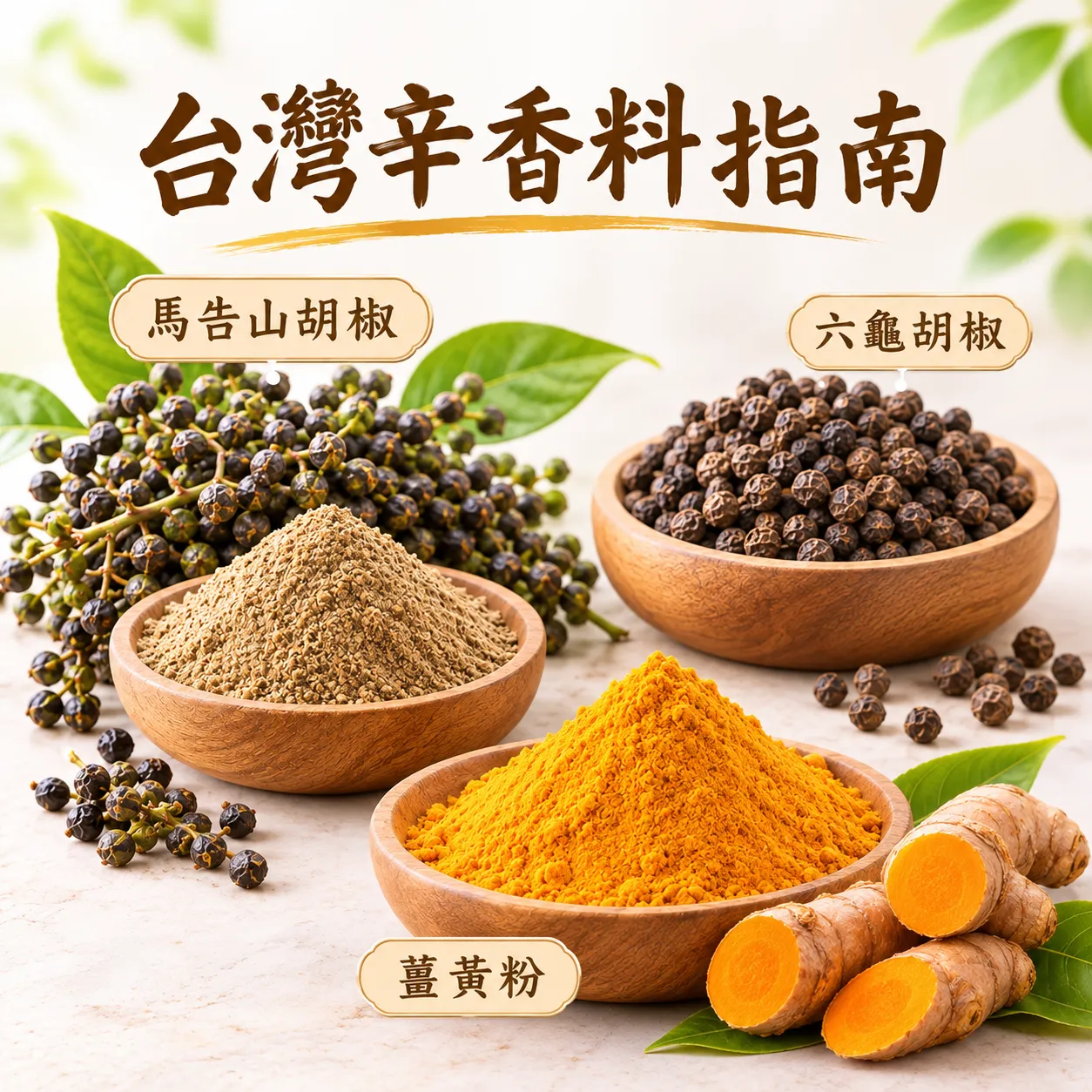
Taiwanese pepper is similar to the internationally known peppers: it is also grown organically in small quantities, and its terroir gives it a distinctive flavour. If growers can overcome the bottlenecks to large-scale production, they could in future follow Cambodia’s Kampot pepper in applying for PGI geographical-indication certification and market it internationally.
Two Keys to Pepper Quality: GL Value and EU PGI Certification
- GL value (grams per litre): the international market measures pepper quality by the weight in grams of a litre of peppercorns. A higher value means the berries are riper, with thicker flesh and a fuller aroma.
- EU PGI (Protected Geographical Indication): one of the EU’s systems for protecting the names of agricultural products’ places of origin, working much like a registered trademark. At least one stage of production must take place in the area of origin, and the product’s characteristics must be linked to that origin.
How to Choose: Practical Tips for Buying Whole Peppercorns and Ground Pepper
Restaurants and snack vendors who buy in bulk mostly purchase from online retailers and wholesale ingredient shops. Here are a few buying tips for reference:
- Look at the colour: black pepper should be dark brown to black, and white pepper slightly off-white. Please avoid anything bleached-looking.
- Smell the aroma: most pepper has fruity, woody notes, with no mould, clumping, rancid oil, earthy smell or other unnatural odours.
- Whole peppercorns first: ground pepper loses its aroma over time. Buying whole peppercorns guarantees 100% purity, and freshly ground pepper has a fresh, rich aroma. Choose wrinkled peppercorns of even size that give a solid rattle when shaken, with no empty, flattened shells or broken powder.
- Purity of ground pepper: check the purity label; 100% purity is best. The price of ground pepper is sometimes related to its purity: a lower price may mean it is mixed with starch and other seasoning powders, so you need to sprinkle on more to get the aroma you want, and in terms of quantity used it is not necessarily cheaper. By the same token, if a lot of pepper still gives little aroma, its purity may be low.
- Specification and origin: specification and origin affect price. Pepper of 580 GL or above and Bold-size berries are the mark of premium spice brands, mostly chosen by high-end, starred restaurants. Small-scale origins, hand processing and pesticide-free growing all make pepper more expensive.
[Food-Safety Alert] Recent Cases of Imported Pepper Failing Tests for Pesticide Residues and Colourings
In recent years, well-known black, white and rainbow peppers from around the world sold on several platforms in Taiwan have been found to contain pesticide residues above the legal limits, including some high-quality peppers with official backing. Consumers are urged not to buy grey-market imports and to keep an eye on related news before buying. Highlights:
- February–October 2026, Malaysia: Black peppercorns were found to contain residues of the pesticide isoprothiolane (亞賜圃) at 0.09 ppm, above the legal limit of 0.05 ppm; a total of 24,000 kg of black peppercorns was returned or destroyed.
- March 2026, Indonesia: Ground white pepper was found to have pesticide residues not meeting the regulations, with the banned insecticide thiamethoxam (賽速安) detected.
- February 2026, Vietnam: Black peppercorns were found to contain Sudan IV (蘇丹色素四號), a colouring not permitted by law.
- December 2025, Vietnam: Rainbow peppercorns (ASSORTED PEPPER) were found to contain Sudan IV, a colouring not permitted by law.
When buying stock or souvenirs from these origins, consumers should be aware that black, white and rainbow pepper may have problems with pesticide residues, insecticides and colourings. Buying pepper products that are officially or origin-certified, can provide test reports, or are imported through regular channels is therefore the safer choice.
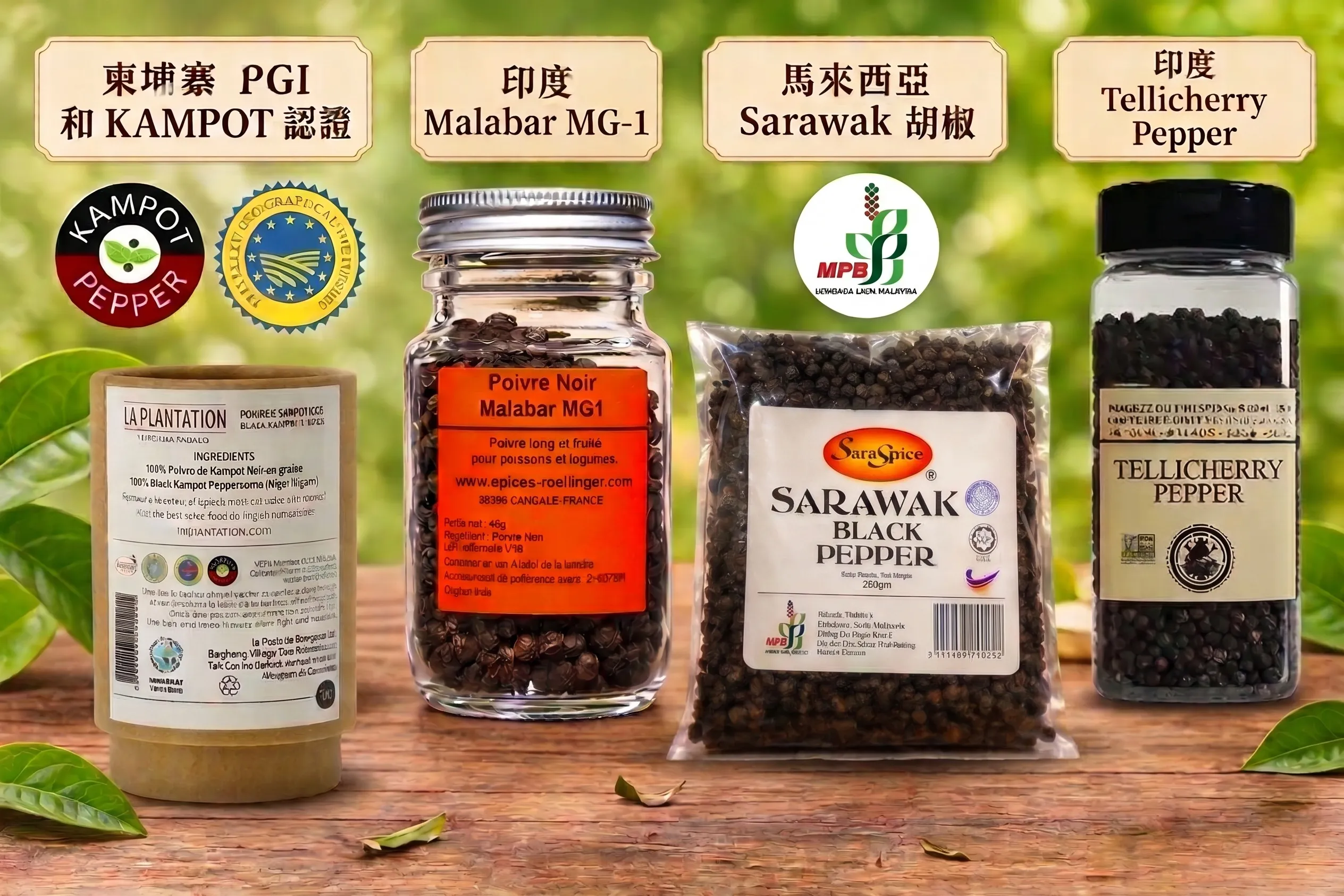
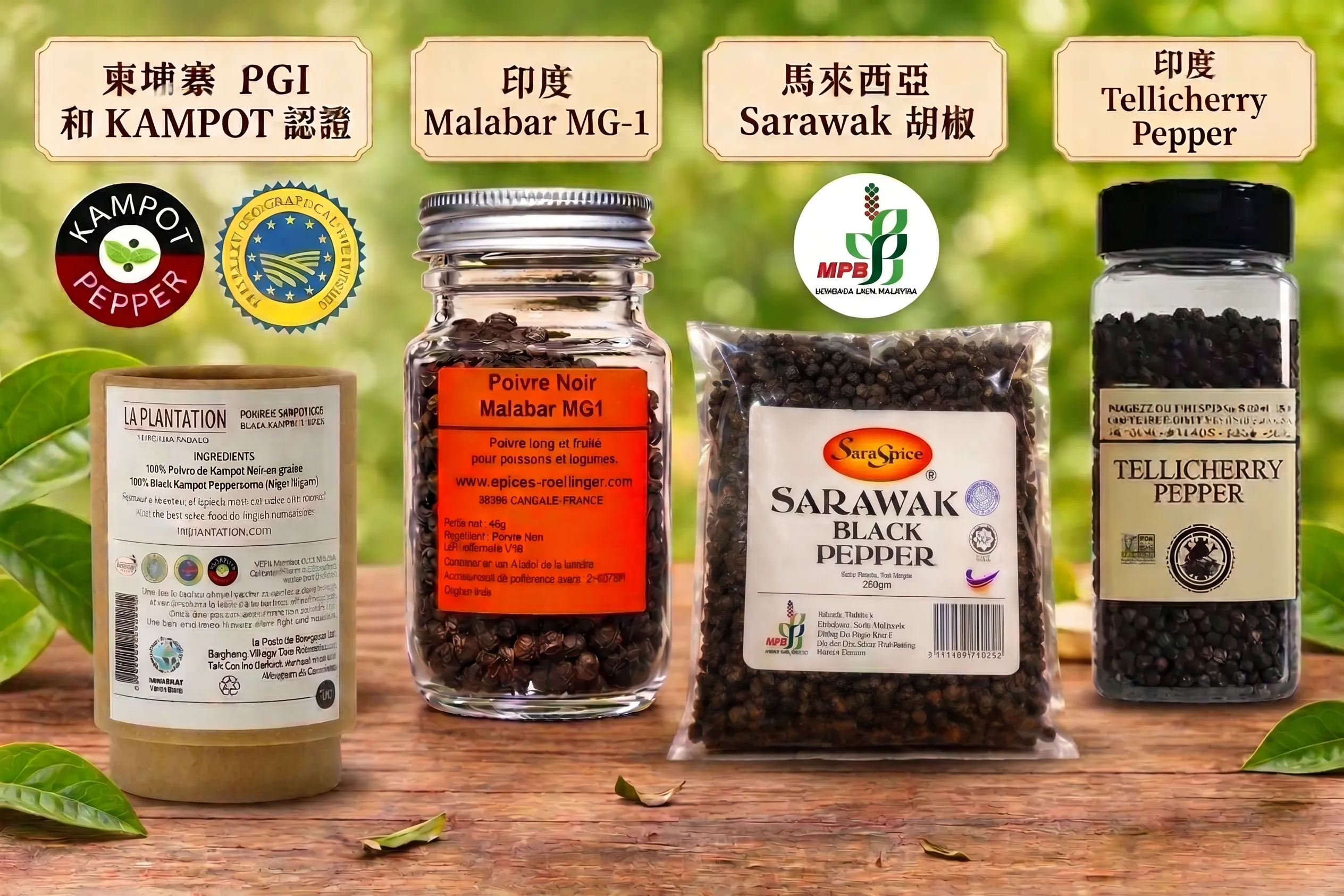
In the image: Cambodia: PGI and Kampot certification · India: Malabar MG-1 · Malaysia: Sarawak pepper · India: Tellicherry pepper.
What to look for: Cambodian pepper carries the PGI and KAMPOT marks; Indian pepper is labelled with Malabar MGI or Tellicherry origin; Malaysian pepper has the official logo in the bottom-left corner of the packaging and Sarawak as the origin.
Photo note: for reference to each country's certification marks only; not for advertising or sales.
References:
- Taiwan FDA, “Malaysian export ‘BLACK PEPPER’ found with pesticide residues not meeting regulations” (in Chinese)
- Taiwan FDA, “Search of foods failing border inspection: pepper” (in Chinese)
Enjoyed this article? Get the newsletter
Our newsletter is written in Chinese for now: new articles and series, with an editor’s note. No spam, and you can unsubscribe at any time.