Besides “tasty”, what are we missing in our food?
For many people, eating is not just a break from work but also a way to relax and something that brings joy. When we enjoy food, we care not only about colour, aroma and flavour but also about presentation. Whether it is a short get-together during a work break, a business meal, or catching up with family and friends at the weekend, a good dining atmosphere deepens our connections and makes the meal a feast for body and mind.
That being so, “finding good food” becomes important. From word of mouth to interactions on social media, we get a glimpse of how obsessed Taiwanese foodies are with “hunting for food”. Many foodies plan their food strategy with roundup guides, navigate to their destination by map, eat their fill and share their impressions with each other. The saying “we don’t mind if it’s out of the way, we only mind if it’s a dud (not tasty)” sums up our passion for food. Even an unremarkable snack shop tucked away in some far-off alley that you could easily walk past can, with multiple touchpoints on social media and pins on a map, become a famous queue-worthy spot on a borderless list of food favourites, however remote it may be.
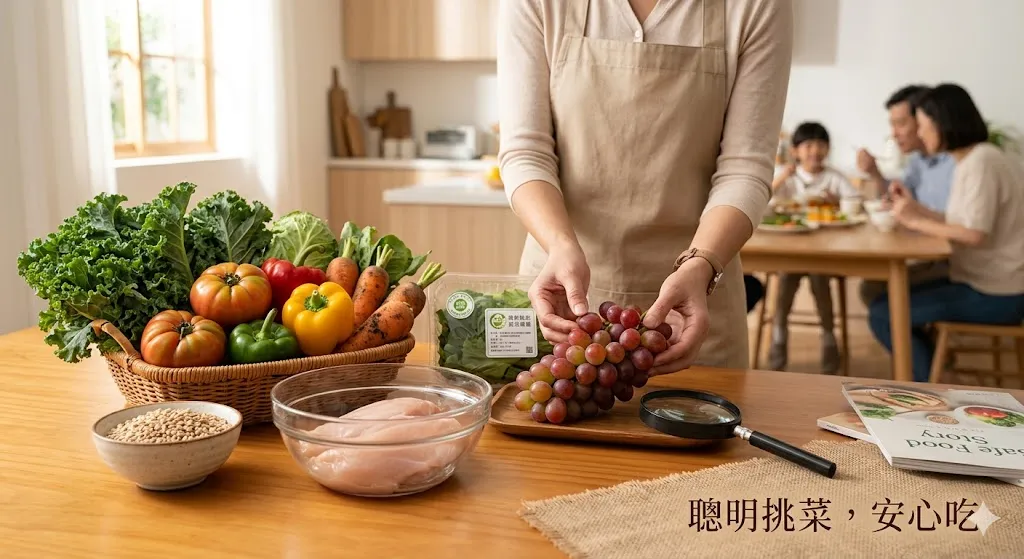
The “food trip” has risen from simply satisfying the appetite to become part of modern leisure culture. But while we concentrate on our food strategies, what are we overlooking? When we shop for food in the supermarket, we notice details such as whether it is “organic”, has “production traceability”, has “no added preservatives”, its expiry date and so on. But when we eat in restaurants, have we ever paid attention to details such as the stated origin of the ingredients, how the restaurant stores its ingredients, the quality of the drinking water, and hygiene and cleanliness?
Not long ago, in 2024, there were a number of food-safety stories in the news. For example: a food-poisoning case at Polam Kopitiam (寶林茶室) in Taipei caused by improper food storage; a franchisee of Bafang Dumpling (八方雲集) storing food in non-food containers, causing a food-hygiene problem; and a food-poisoning case at Xiang La (響辣), a mala hotpot brand of Wowprime Group (王品集團), where the source investigation found that the soup-base supplier, Baochuan (寶川), was a main supplier to many hotpot restaurants, so that many restaurant operators were affected. There was also the case where, owing to lapses in Taiwan’s border inspections, “Sudan Red chilli powder” (蘇丹紅辣椒粉) from mainland China was mixed by many food factories into all kinds of snacks, sauces and seasonings (including pepper, curry powder and turmeric powder), with deep and wide-ranging effects. Most recently, in January 2025, Wowprime Group’s restaurants Xiang Xiang (饗饗), Sunrise (旭集) and Eatogether (饗食天堂) were also exposed for food poisoning and environmental hygiene problems. And in February 2026, a gas explosion caused by renovation work at the 12th-floor food court of Shin Kong Mitsukoshi (新光三越) in Taichung, which injured people, raised our fears about food safety even further… Although this was a public-safety issue only on the fringes of food safety, the news was a wake-up call: as well as caring about the hygiene of where we eat, we also need to consider its safety.
These were all incidents at the top 10 giants of the restaurant industry in the past five years. As industry leaders, they are also prime targets for official inspections, yet even under such scrutiny they could not avoid mistakes. So what is the situation at the small and medium-sized restaurants ranked below the top 10, scattered across densely populated shopping districts and their many satellite areas?
After the Polam Kopitiam incident broke, major cities launched inspections targeting key businesses. Taipei City launched a food-court inspection project in 2024, uncovering many failing businesses and requiring improvements. Taichung City Government inspected 12 speciality restaurants in December 2024 and announced that all had passed. Chiayi City inspected businesses on food-delivery platforms and restaurants around public transport stations. In May 2024, Tainan City “launched special food-safety inspections of speciality snacks, well-known restaurants and night markets”. Hsinchu County inspected 18 food-delivery platform businesses in 2023, all of which passed. Miaoli City inspected seven speciality food businesses in 2023, and Yilan County inspected ten in 2024. City and county governments all launched inspections for the sake of the public’s food safety, and foodies who care about food safety can consult the lists published by each government online through the links below.
Under the headline “The age of the big lunch box! Buffet-style lunch shops broke 10,000 last year, up more than 20% year on year; experts: here comes the hidden worry”, the Economic Daily News (《經濟日報》) reported that lunch-box and catering businesses grew markedly in 2024, with a new-business rate of nearly 22%, and the number of new outlets in Taipei and New Taipei alone growing by about 10% a year. With eating out so convenient in Taiwan, most office workers have got into the habit of ordering meals through food-delivery platforms. Are the authorities keeping proper watch over this for us?
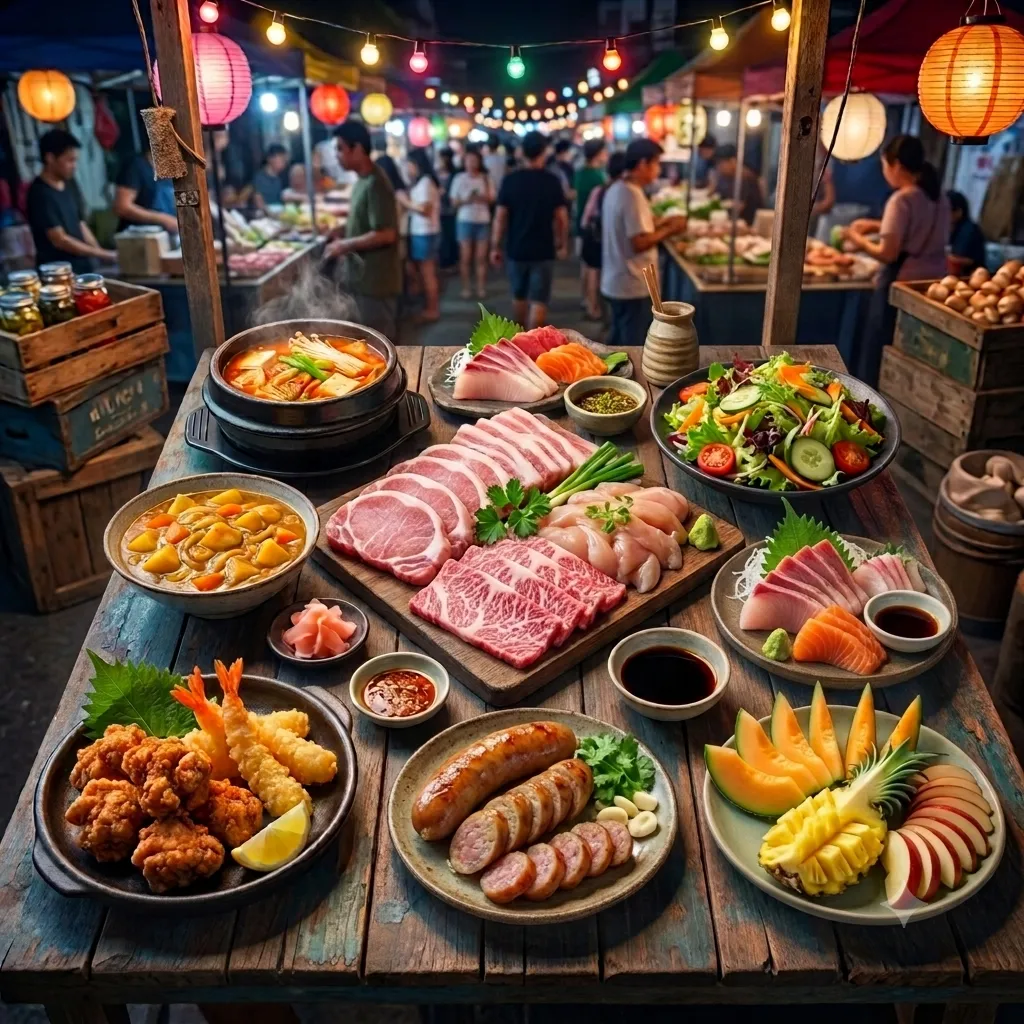
As for the other front-line battlegrounds packed with food, such as the satellite stalls of night markets in big cities and small towns, how much attention do the authorities pay to them? How well is food safety handled in the night markets that operate regularly in towns and cities large and small? Will local governments step in to safeguard food safety so that people can eat with peace of mind?
As for managing stalls, the Executive Yuan (行政院) launched “Joint National Night Market Inspections” (全國夜市聯合查核) as early as 2016 to manage the many stalls and the mobile and irregular night markets. The inspections focus on “hygiene”, “ingredient traceability management” and “recycling of waste cooking oil”. Hygiene covers the stallholders’ staff, environment, utensils and equipment. “Ingredient traceability management” covers the sauces stallholders use (thick soy sauce, chilli sauce, chilli bean paste, vinegar), starch ingredients (sweet potato starch, cornflour, potato starch and so on) and oils, tracing them back to the manufacturer. For waste cooking oil, inspectors check whether it is handed to a licensed disposal company and require documents proving where it went. So how have local governments’ inspections actually gone in recent years? According to official data and reports:
- Taipei City: in October 2025, the Department of Health sampled 98 pork-intestine products. Because Baiwei Company (百威公司) had illegally used industrial-grade hydrogen peroxide to bleach pork intestines, raising food-safety concerns, it inspected 13 night markets, including Ningxia, Shuangcheng, Raohe, Neihu 737, Monga, Huaxi Street, Wuzhou, Xichang Street, Guangzhou Street, Linjiang, Shida, Shilin and Chengde. Hydrogen peroxide may be used as a bactericide in processed fish products, but no residue may remain in food that people eat directly. Hydrogen peroxide was “not detected” in any of the test results, to the public’s relief.
- Tainan City: in February 2023, it inspected the night markets from Diyichang to Xinying Zhonghua Road, and actively promoted and guided the legalisation of 48 night markets. In addition, in May 2024 the consumer protection officers of the Legal Affairs Bureau carried out special inspections of three main categories, “speciality snack businesses”, “well-known restaurants” and “large night markets”, including all-you-can-eat restaurants, ice and dessert shops, hypermarket ready meals, department-store food courts, international restaurants, fast-food restaurants, seafood restaurants and the central kitchens of lunch-box chains, showing a real commitment to food-safety inspection.
- Taichung City: in May 2021, it inspected all 31 night markets in the city and about 4,000 stalls, including six night markets such as Fengjia, Taiyuan, Daqing, Jianxing, Huludun and Waipu, requiring them to follow the city government’s epidemic-prevention measures. In addition, in 2024 it launched the “Taichung Food and Drug Safety Smart Cloud: Food Safety GIS” (臺中食藥安智慧雲- 食安GIS 專區) website (URL: https://gov.tw/eyJ), which provides test results for food items from department stores, hypermarkets, shopping complexes, convenience stores, snack shops and other businesses, so that people who care about food safety can follow up and learn more.
- Chiayi City: in September 2025, it launched inspections of the Wenhua Road Night Market and the Zhongzheng Road shopping district, which had drawn as many as 7.36 million food lovers. It promoted two key requirements, “no food waste or waste oil down the drains; cover all ingredients and food waste”, and also required businesses to make improvements to the dining environment and public safety, showing a level of food safety on a par with the three big cities.
“Under dim lights, in the bustling city at night…” Like department stores, night markets offer local specialities and international food and also serve as entertainment. Although stallholders are at the mercy of the weather, night markets also offer an open-air atmosphere, and many permanent night markets, and even tourist night markets, now draw crowds as well as large hypermarkets and malls do. Their standards of food hygiene and public safety should rise to match. Inspections are only occasional; it is stallholders’ own commitment to food hygiene and public safety that will let residents and tourists eat with greater peace of mind.
Enjoyed this article? Get the newsletter
Our newsletter is written in Chinese for now: new articles and series, with an editor’s note. No spam, and you can unsubscribe at any time.