A risky balance on the tongue: are food-safety standards at chain restaurants and street stalls worlds apart?
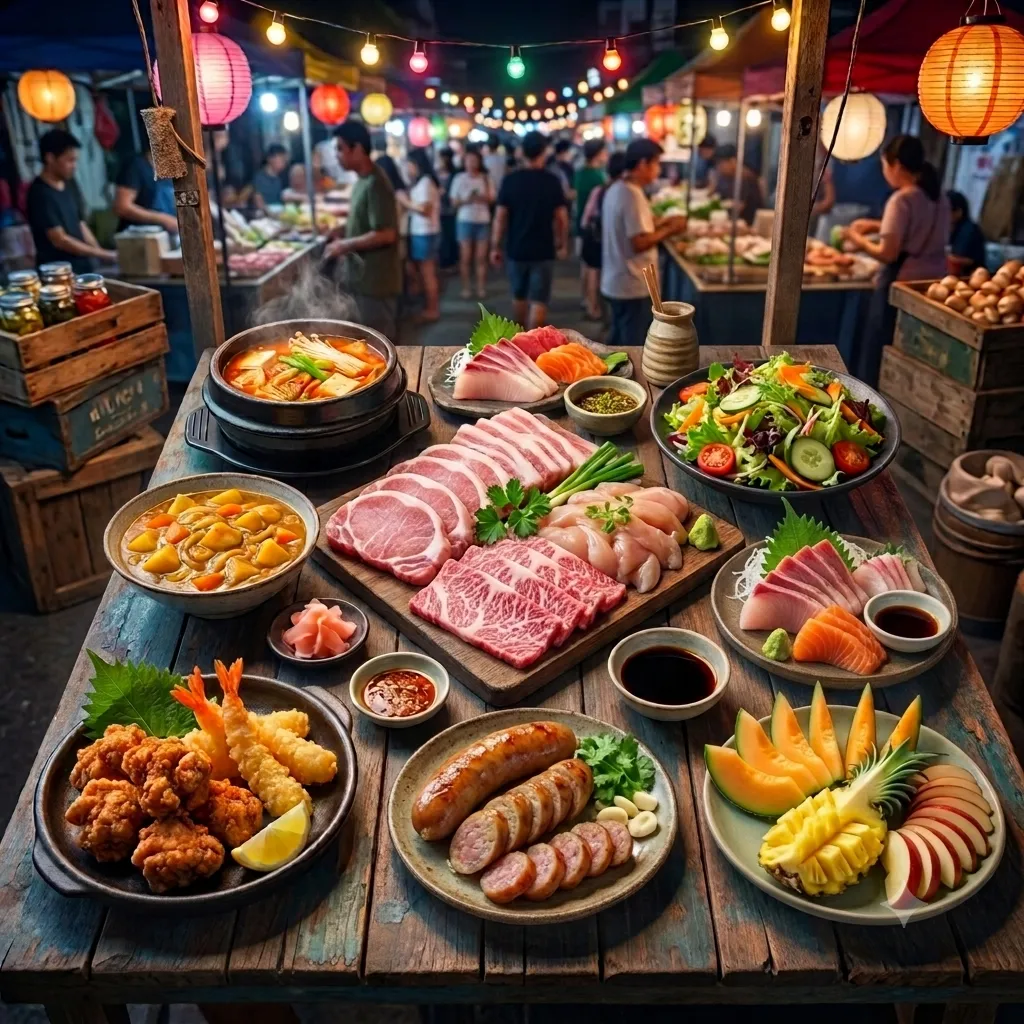
According to Wikipedia, although Taiwan is small and densely populated, it has more than 300 night markets large and small, including many large tourist night markets, and many of them are permanent and open several nights a week. According to the Tourism Administration (觀光署), of the nearly 6.5 million visitor arrivals to Taiwan in 2023 after the pandemic, as many as 78% visited night markets for snacks. And that is before counting the crowds from home and abroad drawn each year by the Lantern Festival, hosted by a different city in turn. The 12-day “2025 Taiwan Lantern Festival” (2025台灣燈會) in Taoyuan drew more than 15 million visits, and the Taoyuan Metro was at one point brought to a standstill by the crowds. Since the opening of the 2024 Lantern Festival in Tainan, its two lantern areas at the High Speed Rail station and Anping had passed 15.2 million visits. The 2023 Lantern Festival in Taipei drew 12.56 million visits over 19 days. There are also the mobile night markets held from time to time in different cities: a Facebook post by “Chiayi City Good Travel” (〈嘉市好旅行〉) revealed that “during the nine-day Lunar New Year holiday alone, it drew more than 600,000 visits!” Truly an unprecedented turnout.
Since night markets draw such crowds, how much effort do the relevant government agencies put into food safety? In fact, every city government has rules for managing night-market hygiene, yet there is still occasional news of food being stored improperly and causing food poisoning. According to statistics from the Taiwan FDA under the Ministry of Health and Welfare, reported food-poisoning cases involved 6,935 people in 2019, 4,920 in 2020, 5,823 in 2021, as many as 4,495 in 2022 and as many as 5,196 in 2023. Official statistics alone record nearly 5,000 reported cases of food poisoning a year, and there is no telling how many other cases went unresolved… Readers who want to know more can search for the relevant news themselves.
From observation, only a few stalls advertise their sources, such as “US beef”, “Australian beef”, “Taiwanese pork”, “oil changed daily” or “Pingtung pearl guava” (屏東珍珠芭樂). So when it comes to where the food comes from, we are really eating it without knowing. In addition, any foodie who has been to a night market knows that although night markets have electricity, most stalls keep their food in cool boxes, and because there is no running water, they mostly use disposable tableware. Environmental and food hygiene therefore comes down to the stallholders’ conscience; whether they do more or less, nobody seems to be in charge. When mediocre hygiene seems to have nothing to do with a constant stream of customers, naturally the stallholders will not pay it much attention.
Night markets are packed with all kinds of international snacks and speciality dishes, a dazzling array. With the crowds jostling and the dim yellow lights adding to the mood, foodies can hardly resist the tempting aromas, and it is only human to grab whatever catches their eye. But if they end up with an upset stomach, what will they do?
A misguided idea seems to be going around: “When you eat at a night market, you have to be careful yourself. If you get an upset stomach, you just have to accept your bad luck; the stallholder is never going to admit fault or pay you any attention!” Is it this kind of thinking that makes us accept bad luck and play things down? Or is it because, having eaten here and there, we can’t work out which stall upset our stomach (proving it would probably be a bit difficult)? Even when food is taken home to eat, so that a problem can be traced and tested to establish who is responsible, whether the takeaway was eaten within its best-before time (usually two hours), and how it was stored, at what temperature and in what conditions, can also make food go off. So even a complaint would be highly disputed, and in the end people let it drop.
By contrast, when foodies get an upset stomach at a large restaurant and it is confirmed to have been caused by lapses in a chain’s food-safety management, they consider it unacceptable and complain, and public opinion and the media condemn it in chorus. To protect their brand image and reputation, large restaurant groups mostly resolve the food-safety problem thoroughly and take full responsibility to the diner (compensation). So eating at chain restaurants actually gives you more protection.
Faced with the same food poisoning, our attitudes towards large restaurants and night-market stalls are clearly worlds apart. Could it be that the public’s acceptance of something wrong as normal has bred complacency about hygiene among night-market stalls, creating food-safety loopholes that stop us eating with peace of mind? And could the same attitude also have indirectly led local governments to treat large restaurant chains and small night-market stalls unequally when it comes to food-safety requirements?
In short, although night markets have enormous pulling power, stalls vary widely in how they store food, the quality of their drinking water and their hygiene and cleanliness. They cannot compare with the efforts of the top 10 restaurant companies or with the model speciality businesses inspected by city governments in 2023 and 2024. So besides promotion by the relevant agencies, night-market food safety still has considerable room to grow and improve.
While local governments put their efforts into collecting rent from night-market stalls, directing traffic, providing car parks and providing toilets for people’s convenience, shouldn’t they also step up education and consider improving night markets’ facilities? For example, they could provide stalls with enough electricity and water so that, with sufficient resources, stallholders can improve how they store food and raise standards of environmental hygiene. The attention of residents and foodies is what drives the government to inspect food safety in night markets. Let’s hope the standard of food safety in night markets lives up to their international fame, so that food lovers from home and abroad can eat safely, happily and with peace of mind, and go home content!
Enjoyed this article? Get the newsletter
Our newsletter is written in Chinese for now: new articles and series, with an editor’s note. No spam, and you can unsubscribe at any time.