標籤

Gene Editing (CRISPR)

Directly editing an organism’s own genes with tools such as CRISPR, unlike GM, which inserts foreign genes.

3 articles · Topic: Agritech & Sustainability

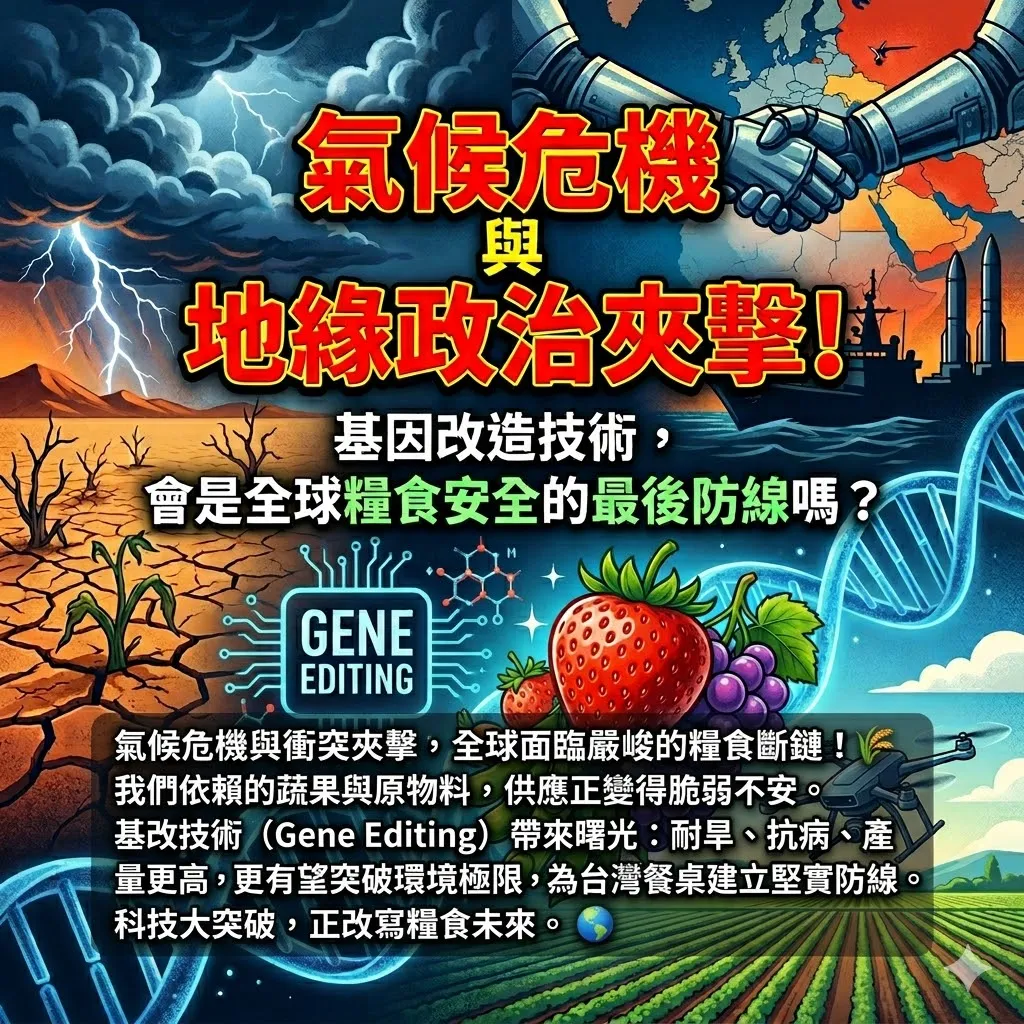
  1. Squeezed by Climate Crisis and Geopolitics: Could Genetic Modification Be the Last Line of Defence for Global Food Security?

    Genetically modified organisms (GMOs) have been developed for more than fifteen years and are still being researched in many countries. Although GMOs have underperformed in the field and in the market, global warming and increasingly normal extreme weather have strengthened countries' resolve to develop them, and GMOs will become key to breaking through adversity.
  2. Is CRISPR GM Food a Saviour or a Threat? The Genetic Revolution on Our Plates, Seen Through Global Controversies

    Whether GM food is developed or imported, CRISPR gene-editing technology is used to modify it. Compared with traditional cross-breeding, it greatly shortens the time needed to find the desired genes and is widely used in agriculture, biology and medicine, yet the promotion of GM food has run into obstacles.

  3. A Cure for Food Crises or a Health Hazard? GMOs, the 2025 Imported Potato Row and Taiwan's Gene-Editing March

    There was a time when the words “genetic modification” struck fear into consumers. What does eating GM food do to our health? A “genetically modified organism” (GMO) is made by transferring genetic material into living cells, forcibly changing their genetic traits.