What Is Sous Vide? How Slow Cooking at Low Temperatures Locks in Tender Meat and Plenty of Protein
With the rise of fitness, weight loss and health awareness, “sous vide chicken” has become a smart way to get protein without extra fat and calories. Sous vide chicken is high in protein and low in fat: a single 100 g pack meets the basic protein needs of one meal, 22–24 g, making it a good nutritional companion for people trying to get fit, lose weight or just short of time.
“Sous vide” originated in France in 1970, a low-temperature vacuum cooking technique developed by chefs who wanted to cook foie gras while keeping its perfect appearance and silky texture. Sous vide chicken is cooked by heating the meat to around 65–70°C, which cooks it through while keeping it springy, juicy and tender. It is no exaggeration, then, to say that “sous vide cooking is a product of the pursuit of texture”.
Today, “sous vide” cooking has spread from top restaurants to ordinary homes. The “sous vide chicken” on convenience-store chiller shelves, which only needs heating in the microwave before eating, shows how easy, convenient and immediate sous vide food has become. Even if you want a reduced-salt, low-sodium meal, you can have one simply by heating it in a water bath.
The boneless, skinless vacuum-cooked “sous vide chicken” sold in supermarkets can be served with ease after a spell in the microwave or a little cooking with ingredients of your choice, making it a time-saving meal for busy office workers. Sous vide meals come in many ready-meal packs, such as fried chicken pieces, salt-water chicken (鹽水雞), shredded chicken, chicken curry and oyakodon rice bowls, as well as sweet-and-sour pork, three-cup chicken (三杯雞), teriyaki chicken, kung pao chicken and more, so there is plenty to choose from. Many chefs even use the sous vide principle of heating at a constant temperature without overcooking to teach people how to make sous vide beef, sous vide fish and more, creating a wide range of tasty dishes.
Some say, however, that relying on sous vide chicken as a long-term weight-loss diet may lead to anaemia, low blood sugar, constipation, kidney stones and other problems. Such reports can perhaps be put down to the nutritional imbalance caused by a long-term restricted diet, and to residues of artificial additives, preservatives and disinfectants building up in the body without being fully excreted.
Beware Anaemia If You Eat Nothing Else! The Hidden Burden of “High Sodium and Phosphates” in Shop-Bought Sous Vide Chicken
Most “sous vide chicken” sold in major retail chains and convenience stores has been aged and pre-seasoned, with additives and flavourings added to improve its texture, then vacuum-packed to keep it fresh and tasty. If the food tastes quite salty or strongly flavoured once opened, it may be relying on “high salt” to inhibit bacteria, with added water-retaining agents and binders (for example, nucleotide seasoning blends containing phosphates and pyrophosphates) to improve the texture. Eating too much of these additives, however, may lead to calcification of the blood vessels, strain on the kidneys and cardiovascular disease!
*Note: you can check the artificial additives in “sous vide chicken” in the ingredients list on the pack, where ingredients are listed in order of quantity from highest to lowest.
What Temperature Makes Sous Vide Safe? Key Rules for Preventing Bacterial Food Poisoning at Low Temperatures
Like ordinary semi-raw food or raw sushi, “sous vide chicken” can still spoil if it is not heated thoroughly or if it is stored at unstable temperatures, causing stomach upsets or even food poisoning. So eating “sous vide chicken” healthily comes with conditions!
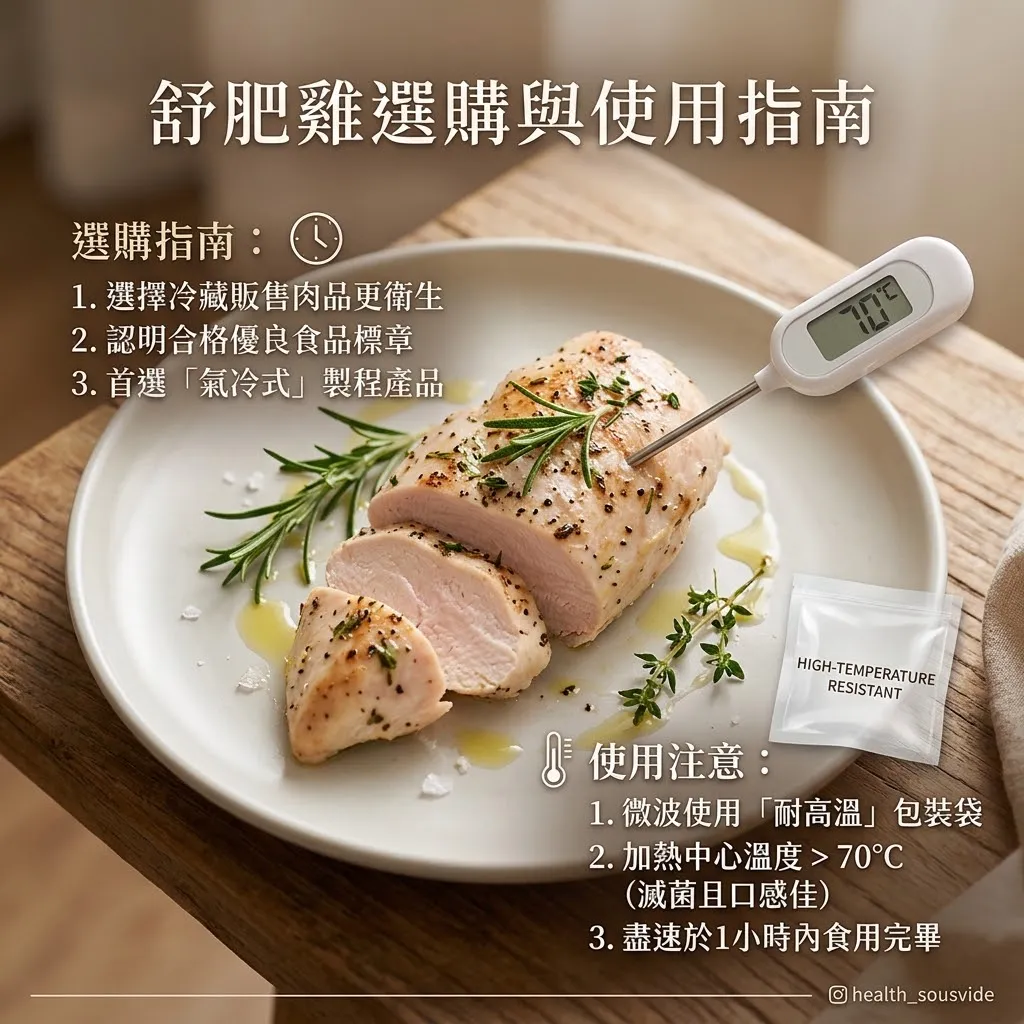
With “sous vide” cooking, make sure the core temperature reaches more than 72°C (a core temperature above 70–75°C) to kill bacteria effectively. If the meat at the centre of the chicken has turned white when you pull it apart, and the juices run clear, and the texture is not soft and sticky, it is safe to eat.
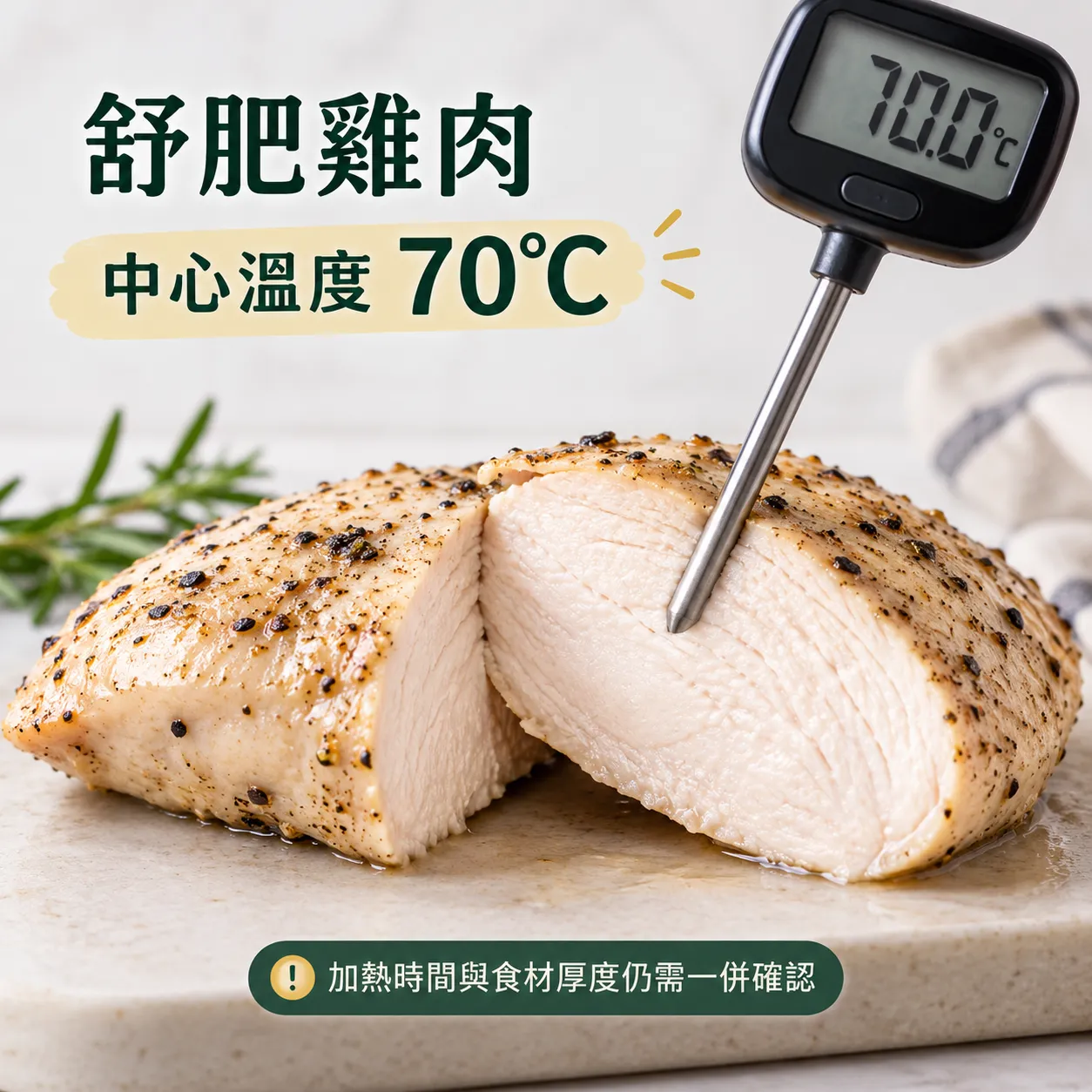
In the image: “Sous vide chicken” · core temperature 70 °C · heating time and the thickness of the meat still need to be checked.
If the heating temperature is below 70°C, or the heated meat cools into the 50–20°C range, it easily becomes a breeding ground for pathogens (Salmonella, Staphylococcus aureus, E. coli, Bacillus cereus). So consumers who like raw or rare meat or food (including beef, pork, oysters, sashimi and so on) but have sensitive stomachs should eat it with caution.
What’s more, when the room temperature in summer reaches 30–32°C or higher, bacteria in meat can also multiply quickly. So whenever you eat a “sous vide chicken” meal, finish it within 1 hour, and do not leave it at room temperature for more than 2 hours. In addition, once you bring “sous vide chicken” home, store it below 5°C to prevent bacterial growth.
Air-Chilled vs Water-Chilled Chicken: Understanding the Slaughter Process to Avoid Disinfectant Smells and Choose Good Chicken
Residues on chicken are related to how it is disinfected during slaughter. When buying chicken at a market or store, besides checking that the meat is pink, glossy and springy, consumers can also take a close sniff to see whether it smells of disinfectant. This is because after slaughter, chicken is soaked in chilling tanks, that is, a “water-chilled” disinfection process, to which sodium hypochlorite (disinfectant) is added at a concentration of 20–50 ppm to inhibit microbial growth. Over time, it evaporates and the residual concentration falls below the drinking-water standard of 1 ppm. “Water chilling” is the main way of disinfecting chicken at slaughter in Taiwan.
Under normal circumstances, chicken on the shelves may not be disinfected again with disinfectant. So if consumers can smell disinfectant, it may be because the business has put the meat through a preservation process to extend its shelf life, giving the meat a disinfectant smell, which may mean the meat is not fresh enough. When food factories make “sous vide chicken”, they aim for just the right doneness and tenderness, not high temperatures that would remove residues.
According to National Chung Hsing University (中興大學) and related reports from August 2019, research by its veterinary department in the “Project to Improve the Quality and Hygiene Safety of Domestic Chicken Through Air-Chilling Processes” (以氣冷式製程提升國產雞肉品質及衛生安全計畫) found that air-chilled chicken stored at a low temperature of -2°C could keep for up to 10 days, maintained good muscle quality during storage, and had lower total bacterial counts than water-chilled chicken.
The “air-chilling process”, which has been widespread in Europe for 50 years, was only introduced in Taiwan in 2017. Because the whole process takes place at low temperatures, disinfection takes longer than with water chilling, but it does more to lower bacterial counts, prevents water loss when the meat is thawed, preserves nutrients, and keeps chicken skin crisp when pan-fried.
From this we can see that the slaughter and disinfection process is linked to the meat’s nutrition, texture, residual bacterial count and artificial residues. Besides costing more, sous vide chicken made with the “air-chilling process” is of more consistent quality and safer, and is more popular with large restaurant chains.
So in future, when consumers buy meat and see the slaughter and disinfection process stated on the packaging, you will understand the difference and be able to choose “sous vide” meat wisely.
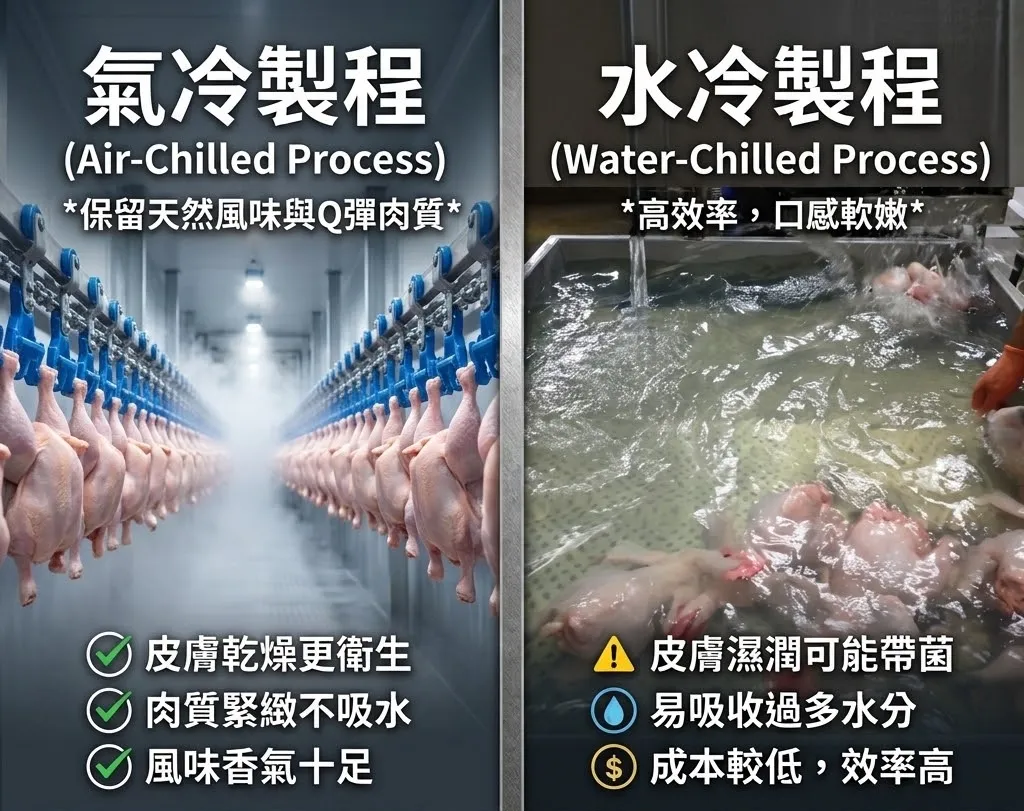
English text of this image
- Air-chilled process (keeps natural flavour and a springy texture): ✓ drier skin, more hygienic · ✓ firm meat that doesn’t soak up water · ✓ full flavour and aroma.
- Water-chilled process (efficient, tender texture): ⚠ moist skin may carry bacteria · soaks up excess water easily · lower cost, high efficiency.
How to Remove Odours from Chicken
Here are some ways to remove residues from the surface of chicken. Choose according to the dish you plan to make:
- After taking raw chicken out of its packaging, rinse it with water from a drinking-water filter until the surface is no longer slippery, then pat it dry with kitchen paper.
- If it is going to be cooked through, you can blanch it briefly in boiling water, which also helps remove disinfectant residues.
- Pan-fry it in a hot pan for 30–45 seconds until the surface is lightly golden; the steam given off during frying helps remove the disinfectant smell.
A Guide to Buying and Using Sous Vide Foods
According to a May 2013 National Taiwan University (台大) report, “A Comparison of the Number of Pathogenic Microorganisms from Carcasses Reaching the Shelves to Purchase by Consumers” (屠體上架後至消費者購買過程中致病性微生物數量的比較), microbial counts from lowest to highest were:
sold refrigerated < transported on ice < room-temperature stalls
So meat sold in refrigerated conditions is more hygienic. In addition, food lovers who enjoy “sous vide” foods should look for quality foods that have passed inspection, and products labelled as made with the “air-chilling” process are the best choice. When microwaving, use “heat-resistant” packaging or packaging labelled as food-grade BPA-free material, so that no toxic substances are released during heating. When heating the meat, the core temperature must be above 70°C, which not only kills bacteria but also gives a good texture, and eat it as soon as possible, within 1 hour, to keep it safe to eat.

In the image: product packaging (much of its small print is garbled): “TAP traceable agricultural product” · air-chilled chicken · skinless chicken breast · keep frozen.
Image source: Taipei Fish Market (台北魚市) https://e-mart.tpfish.com.tw/products/330005
Enjoyed this article? Get the newsletter
Our newsletter is written in Chinese for now: new articles and series, with an editor’s note. No spam, and you can unsubscribe at any time.