標籤

Battery Cages

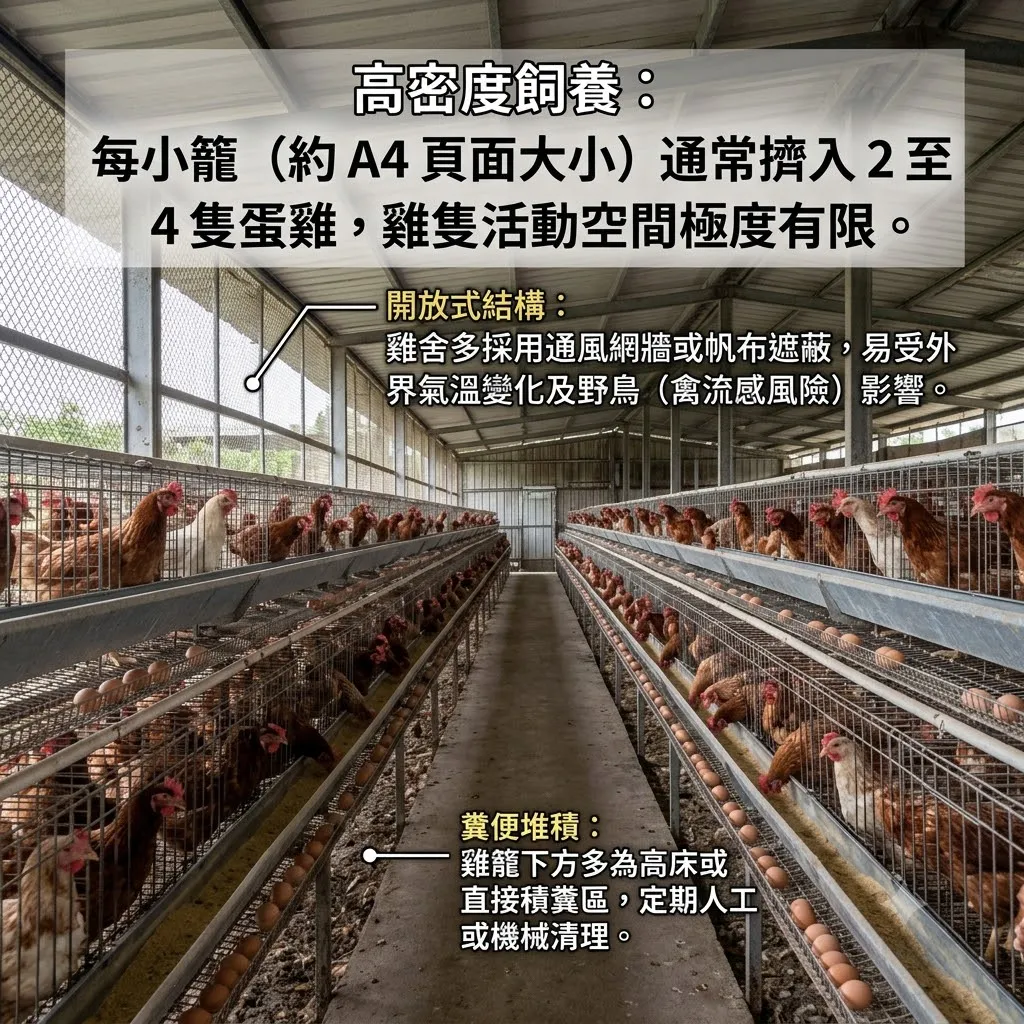
Conventional stacked cages: high stocking density and easy management, and the focus of animal-welfare and disease-control debates.

3 articles · Topic: Food Production & Animal Husbandry

  1. Battery Cages or Barns? How Housing Affects Laying Rates, Egg Quality and Animal Welfare

    Taiwan keeps about 45 million laying hens. Chickens are broadly divided into broilers and layers: hens lay eggs and roosters are raised for meat. Broilers are slaughtered after a set time (about 35 days for white broilers), while laying hens are kept until about 18 months to 2 years old, when their laying rate falls.
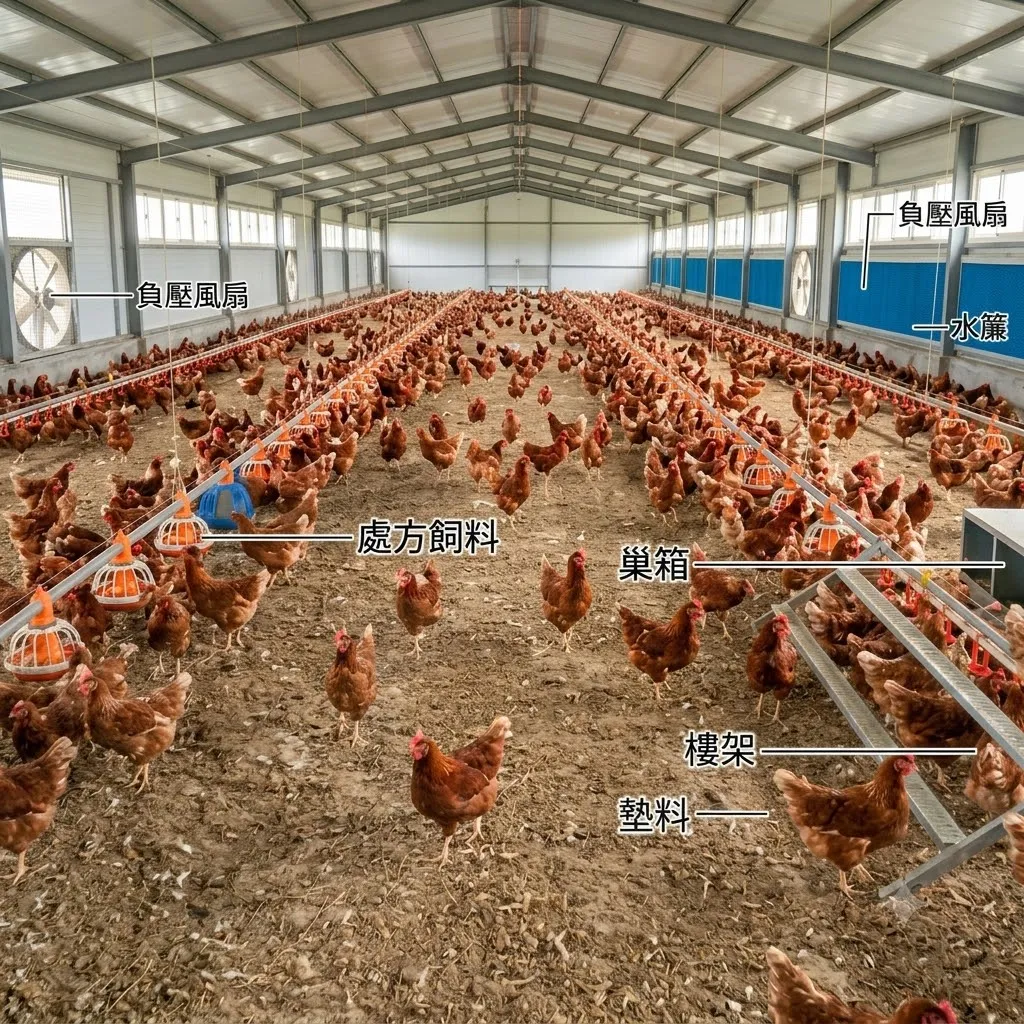
  2. Beyond Egg Shortages and Battery Cages: Evaporative-Cooling, Barn and Free-Range Farms Compared on Cost and Animal Welfare

    In December 2015, out of concern for animal welfare, the Council of Agriculture encouraged egg producers to produce eggs in welfare-friendly ways and drew up the “Definitions and Guidelines for Egg Friendly Production Systems”, which include a limit of no more than 6.25 laying hens per square metre, so that lower stocking densities raise stronger, healthier hens.

  3. H5N1 Crosses Species: Inside the “A4-Sized” Battery Cages on Taiwan's Chicken Farms, and Why Bird-Flu Culls Still Soar

    From January to May 2026, an H5N1 avian flu outbreak in Taiwan led to about 330,000 birds being culled on 14 farms in 6 counties and cities. In April, a chicken farmer in Fengyuan was fined NT$1.18 million for concealing the outbreak and allegedly selling eggs from infected flocks. The outbreak is in fact linked to bird-flu events around the world…